
There is a version of the Sendo story that looks like bad luck. A merger with Tiki that collapsed over shareholder disagreements. A pandemic that first turbocharged and then complicated its grocery pivot. Competitors backed by Alibaba and Tencent with what amounted to an unlimited cheque book.
There is another version that looks like a strategic error repeated until it was fatal.
Sen Do Technology announced on July 5 that Sendo Farm, its online grocery platform and last active business unit, would shut down on July 10. The closure marks the end of a journey that started in 2012 as an internal project at FPT Corporation before spinning off independently in 2014 and spending the better part of a decade as one of Vietnam’s most prominent ecommerce names.
At its peak, the Sendo marketplace served more than 12 million customers across all 63 provinces of Vietnam, hosted more than 500,000 sellers, listed an estimated 17 million SKUs, and reached an annualized GMV of $1 billion in 2019. It had its own e-wallet, SenPay, which ranked third in Vietnam by transaction value that year. It was the first ecommerce company in Vietnam to receive an e-wallet license.
None of it was enough.
The Capital War Nobody Told Sendo It Could Not Win
The core diagnosis is not complicated, though it took years to become undeniable. Shopee, backed by Sea Group with capital from Tencent and access to global capital markets, and Lazada, owned by Alibaba, were not operating on normal commercial logic.
They were buying market share at prices no locally funded competitor could sustain. Free shipping. Flash sales. Vouchers stacked on top of vouchers. Every lever that drives ecommerce volume in Southeast Asia, pulled simultaneously, indefinitely, with money that did not need to produce a return for years.
Sendo’s response was to play the same game. It adopted the Shopee and Lazada playbook and lost the capital war because it was fighting with $130 million against opponents with access to billions.
The problem with matching a subsidized competitor’s promotions is that you attract promotional customers rather than loyal ones. Sendo discovered this firsthand. Purchases on the platform ceased as soon as promotions ended. Despite aggressively building out an ecosystem, SenPay for payments, SenMail for brands, delivery coverage across all 63 provinces, the underlying business never built the customer loyalty that would have made any of that infrastructure defensible.
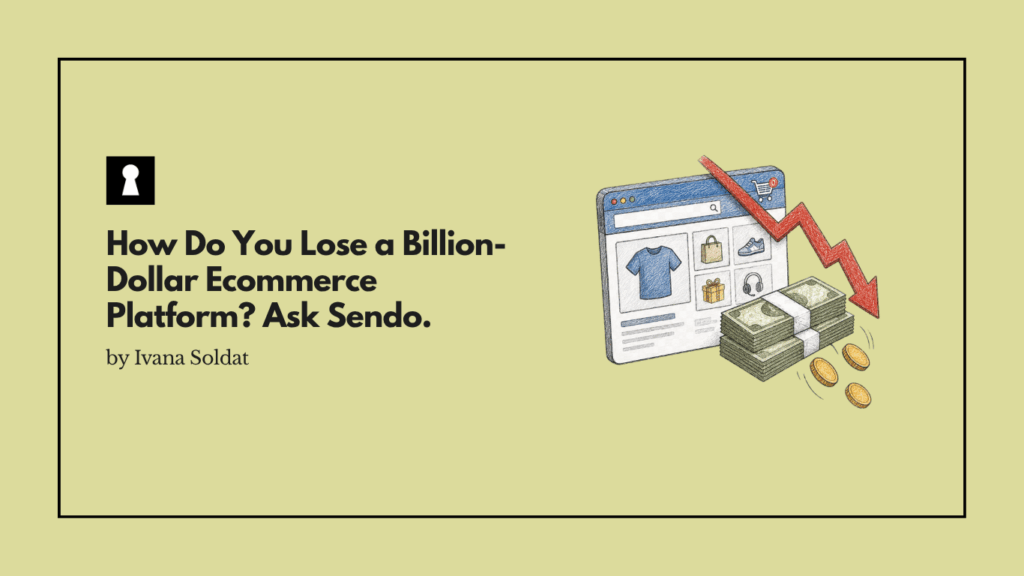
In 2019, the year Sendo hit its billion-dollar GMV milestone, it lost VND 1,586 billion (roughly $60.9 million) on net revenue of VND 547 billion ($21 million). It was spending nearly three times its revenue to generate that revenue. The math was never going to work.
The Merger That Could Have Changed Everything
In 2020, Sendo and Tiki entered merger talks. The logic was compelling: two domestic Vietnamese ecommerce companies combining would have created a credible alternative to the foreign-funded duopoly, with shared infrastructure, combined seller networks, and a platform that could theoretically compete without needing to outspend Shopee dollar for dollar.
The merger collapsed. Shareholder disputes, reportedly over deal terms that some Sendo investors felt disproportionately favored Tiki, killed the transaction. The COVID-19 pandemic eliminated whatever remaining momentum the talks had. Two years later, Sendo exited its main marketplace entirely as its market share slipped below 1%.
Whether the combined entity would have survived against Shopee and TikTok Shop is unknowable. What is certain is that the alternative, two separate domestic platforms each continuing to bleed capital against each other and the foreign giants, ended with both weakened.
The Grocery Pivot That Almost Worked
After exiting the main marketplace in April 2025, Sendo refocused entirely on Sendo Farm, launched in late 2021.
Grocery is a category where local knowledge, fresh product relationships, and physical proximity matter more than the global logistics networks that give Shopee and Lazada their structural advantages. A next-day delivery model built around neighbourhood pickup points at convenience stores, pharmacies, and household-operated locations reduced last-mile costs and addressed fresh product spoilage.
It worked, for a while. By mid-2024, Sendo Farm was handling approximately 50 tonnes of goods daily, serving 10,000 customers, with a network of 5,000 partner pickup locations across Hanoi and Ho Chi Minh City.
Then the competition arrived. WinMart, GO!, and MM Mega Market strengthened their digital grocery channels. GrabMart, ShopeeFood, and beFood launched on-demand grocery services backed by platforms with the logistics infrastructure, the user base, and the capital to absorb years of losses. Sendo Farm found itself surrounded by the same dynamic that killed the main marketplace: well-funded competitors with more patience and deeper pockets.
Vietnam’s Ecommerce Market Has Stopped Rewarding Survival
Vietnam’s ecommerce market grew 34.8% in 2025, with the four dominant platforms generating combined revenues of VND 429 trillion ($16.5 billion). The market is enormous and still growing. But it has entered a more disciplined era, where platforms that once burned cash to buy share are shifting toward profitability, raising fees on sellers, and implementing tighter quality controls.
In 2025, more than 13,700 shops were removed from Vietnamese ecommerce platforms for selling counterfeit, banned, or untraceable products. Vietnam’s new Law on E-Commerce came into effect on July 1, 2026, requiring platforms to verify seller identities before allowing them to conduct business.
The era of easy, anonymous, low-cost marketplace entry is ending. For Sendo, this disciplined era arrived too late.
Our Take
It Had Everything Except the One Thing That Mattered
The Sendo story is useful not because it is unusual but because it is so common.
A well-funded local champion, operating in a high-growth market, with genuine product capability and a real customer base, loses not because it built something bad but because its opponents had access to capital at a scale that made competition on price and volume impossible.
Adopting your best-funded competitor’s playbook when you do not have their budget is not a strategy. It is a slow way to lose.
The question Sendo never adequately answered was not how to beat Shopee at Shopee’s game. It was what game Shopee could not play. The grocery pivot was the closest the company came to an answer. It ran out of time and money before that answer could compound into something durable.