
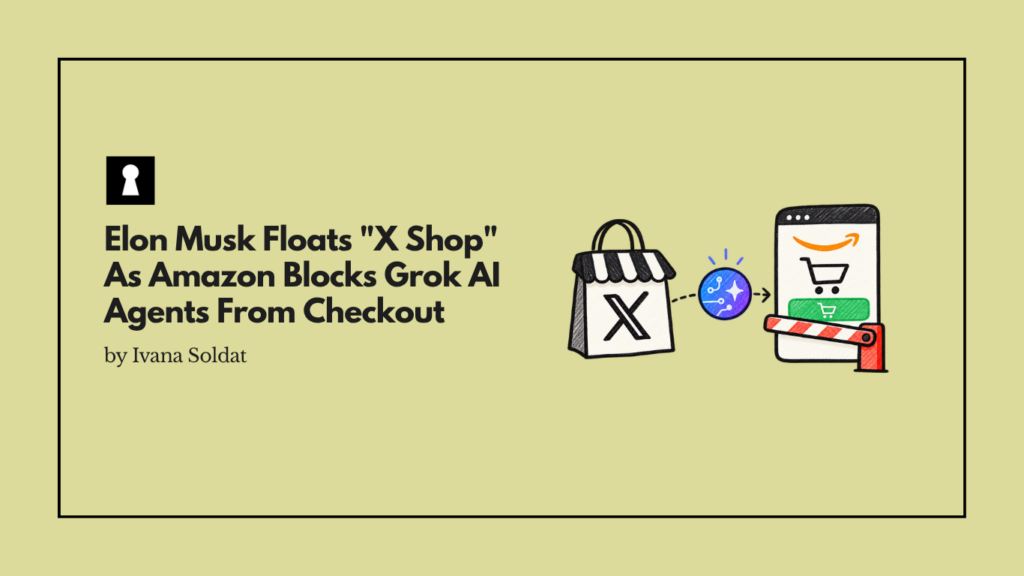
The catalyst for this announcement was user reports that Amazon is preventing xAI’s Grok bots from completing purchases on its platform. In response to a user suggesting the creation of an “X Shop,” Musk posted on X, “Maybe we should start a competitor to Amazon.”
This is not an isolated incident, as Amazon has systematically blocked third-party AI shopping agents, including Meta’s Muse, citing concerns over identification, terms of use, and unauthorized account access.
By treating autonomous agents as security threats rather than legitimate users, Amazon is drawing a hard line in the sand over who controls the checkout experience.
Musk Promises To Underwrite AI Shopping Errors
To build trust in this nascent technology, Musk made a bold guarantee regarding the reliability of his company’s AI. He stated that if a Grok Bot makes an error with a purchase or leaks information, SpaceX will cover any resulting losses.
He further emphasized that such a circumstance has not happened yet. This pledge is a strategic maneuver to overcome consumer skepticism about handing over financial autonomy to an algorithm.
By putting corporate capital on the line, Musk is attempting to position Grok as a safer, more reliable shopping proxy than navigating traditional retail websites manually.
The Battle For The Agentic Commerce Interface
Grok Bot consists of autonomous AI agents capable of completing multi-step tasks like shopping and booking, and was released in early beta in August. It is currently available through premium subscription plans like SuperGrok Heavy.
The clash between Grok and Amazon is a microcosm of a much larger war for the future of ecommerce. Retail giants like Amazon want to keep the entire transaction loop, from discovery to payment, within their proprietary, ad-supported ecosystems.
Conversely, tech companies like xAI and Meta are building agents designed to bypass traditional storefronts, aggregating demand and dictating terms to retailers.
Our Take
Bold Talk Won’t Beat Prime Delivery
Elon Musk’s threat to build an “X Shop” is less a concrete business plan and more a rhetorical weapon in the escalating war over agentic commerce. Amazon’s decision to block AI agents is a defensive moat designed to protect its advertising revenue and customer data.
Musk’s countermove is to frame this security measure as anti-consumer, positioning his own AI as the liberated alternative. However, building a logistics and retail network to rival Amazon is a multi-decade, capital-intensive endeavor.
Until xAI can actually deliver physical goods with the speed and reliability of Prime, “X Shop” remains a provocative headline rather than a viable threat to Amazon’s dominance.