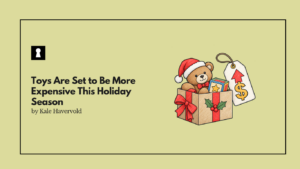

Toys are among the most popular gifts to give around the holidays, but the rising price of toys may leave some people unable to do so this year. Whether driven by tariffs, rising fuel costs, or something else entirely, toys may be pricier this holiday season, joining many other items, as inflation continues to climb.
Yet despite these higher prices potentially pricing out some consumers, the toy industry continues to grow, largely driven by adults.
Toy Prices Increasing Ahead of the Holidays
As the holidays inch closer, toy prices are rising. In fact, prices in the toy category have increased by 4.2% on a seasonally adjusted basis from August to September of this year. The year-over-year unadjusted change between September 2026 and September 2025 was 6.6%.
This data is according to the Consumer Price Index from the U.S. Bureau of Labor Statistics and shows that toys are becoming harder for families to afford, especially as inflation in general continues to rise.
Overall, the Consumer Price Index increased by 0.6% on a seasonally adjusted basis in September, after going up by 0.4% in August. Over the past year, all items increased by 3.7%.
As the cost of toys and a variety of other items continues to rise, many customers are growing uncertain about their finances. In fact, 45% of consumers describe their household finances as insecure going into the holidays, while more than 70% say that saving money will be a priority this year.
The Potential Reasons for These Price Increases
While it’s impossible to know the exact causes of these price increases, there are a few possible reasons. First, because many of the toys being purchased around the holidays are made in China or other countries overseas, the high import tariffs that the USA has placed on these areas could partially be to blame.
Also, the recent rise in fuel prices globally has made transporting these toys more expensive. As a result, carriers and businesses may pass these additional costs down to consumers in the form of price increases.
However, these rising fuel prices aren’t only hurting carriers, shippers, and companies, but also the general public, as gas prices rose by 9.1% in September.
Higher Prices Aren’t Slowing Down the Toy Industry
While you may think that higher prices for consumers are negatively impacting the toy industry, that doesn’t seem to be the case. The U.S. toy industry actually had its best first-half performance in six years, with toy dollar sales growing by 17% in the first half of this year compared to the year-ago period.
A major driver of this growth and success in the toy space has been adults. In fact, adults without children now make up over half of all toy sales. Also, many shoppers have migrated away from cheaper and more affordable toys to ones at higher price points.
Our Take
Navigating Smaller Consumer Budgets as an Ecommerce Brand
Whether they’re cutting back due to higher prices or to prioritize saving, it seems many consumers will be operating with smaller budgets this holiday season, both when buying toys and other items.
However, even with some shoppers having smaller budgets, there are still opportunities for ecommerce brands to succeed.
Some strategies that sellers can use when budgets are smaller include introducing bundle discounts to increase average order value (AOV) while offering value, offering flexible payment options, or implementing dynamic pricing to ensure you’re always in line with (or beating) your competitor’s prices.