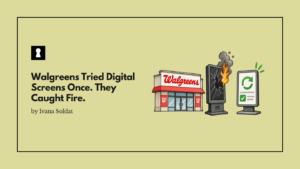
The Looma screens sit alongside products rather than in front of them, positioned at two large placements near the front of the store and in the pharmacy waiting area, as well as digital end caps that spotlight single brands or show multi-brand educational content.
Walgreens said it selected Looma because it “delivers content designed to educate rather than interrupt shoppers” and measures performance using full-funnel metrics rather than just how often the ad played. Full-funnel measurement versus play-count measurement is the operational difference that matters most for brands considering whether to run campaigns on the Walgreens network.
A play-count metric tells you how many times your 15-second clip appeared on a screen. A full-funnel metric tells you whether shoppers who saw the screen actually bought the product.
Looma has a network of more than 7,000 screens across 10 retail banners, reaching 13 million unique shoppers per month at retailers including Kroger, H-E-B, Harris Teeter, and BJ’s Wholesale. The Walgreens partnership extends that reach and gives brands already working with Looma additional exposure in Walgreens locations without separate campaign setup.
The Pharmacy Waiting Area Opportunity
Storms specifically called out the pharmacy waiting area as having “tremendous dwell-time exposure.” A March 2026 survey of more than 1,000 shoppers by Grocery TV and analyst Andrew Lipsman found grocery shoppers were more receptive to ads in the pharmacy than in other parts of stores, including more receptive than to cooler screens.
The dwell-time logic is straightforward. A shopper picking up a prescription may wait 10 to 20 minutes. They have nothing else to do. They are not pushing a cart through the store. They are standing in a defined area with screens in their sightline. The average in-store shopper passes a display in seconds. The pharmacy waiter is a genuinely captive audience in a way that almost no other retail environment creates.
For CPG brands in beauty, personal care, and health categories, the pharmacy waiting area is also category-appropriate. A customer picking up a prescription is already in a health-conscious mindset. An educational screen about skincare, vitamins, or wellness products is contextually relevant in a way that an unrelated brand ad in the same location would not be.
CVS Got Here First
The Walgreens launch follows CVS, which had already added digital end caps in more than 600 stores by February 2026 and expects approximately 11,000 total digital screens nationwide in 2026.
CVS Media Exchange’s VP and GM Parbinder Dhariwal described the same educational framing Walgreens is now adopting: “This format allows us to think more personally about the shopper’s journey and tailor messaging to the moment, something traditional end caps simply can’t do.”
Walgreens entering 1,200 stores in October puts it materially behind CVS’s scale, but ahead of most competitors. The brands that have already built campaigns in the Looma network will be the immediate beneficiaries, as their existing creative assets extend into Walgreens without separate setup.
What This Means for Retail Media Strategy
The Circle K Full Circle Media retail media network, with 200 million monthly impressions from gas station screens, identified a core problem with out-of-store retail media: the customer at the pump is not in the store making product decisions.
Walgreens’ in-store screens, particularly in the pharmacy waiting area, solve exactly that problem. The shopper who sees a vitamin brand on a pharmacy waiting room screen is in the same building, within walking distance of the product. The path from impression to purchase is measured in steps rather than days.
For CPG brands planning Q4 retail media budgets, the Walgreens Looma partnership opening in October creates a new placement to evaluate for health, beauty, and personal care campaigns.
Our Take
Walgreens Learned the Hard Way That Digital Screens Work Best When They Do Not Get in the Way
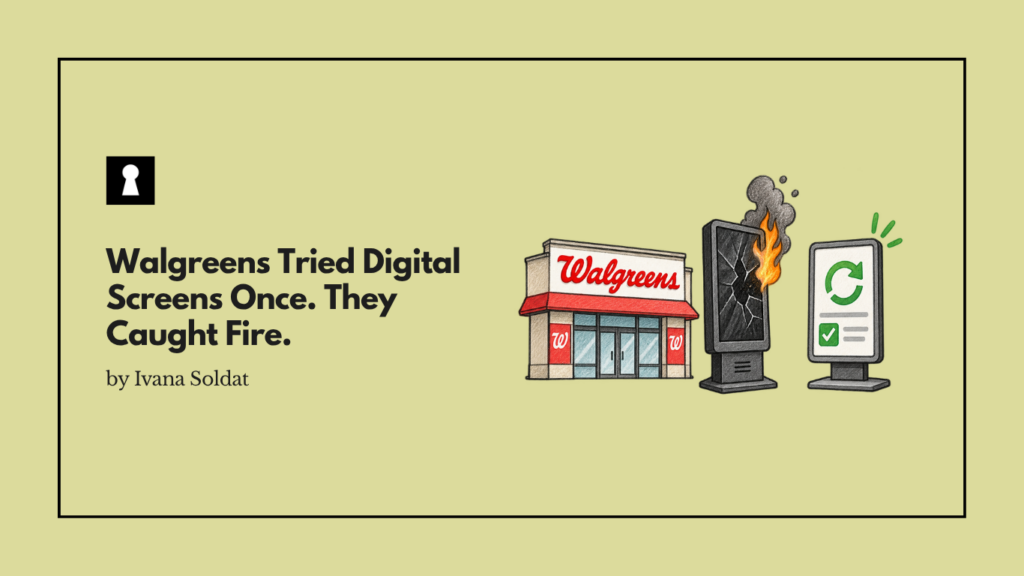
The Walgreens Looma partnership is a measured re-entry into in-store digital media after the Cooler Screens disaster, and the design decisions reflect what that experience should have taught: screens that replace something shoppers want to see create friction, screens that accompany products shoppers are already considering create opportunity, and content that educates performs better than content that promotes.
The pharmacy waiting area placement is the most commercially interesting piece of this launch, because dwell time and category relevance combine in a way that almost no other retail environment achieves.