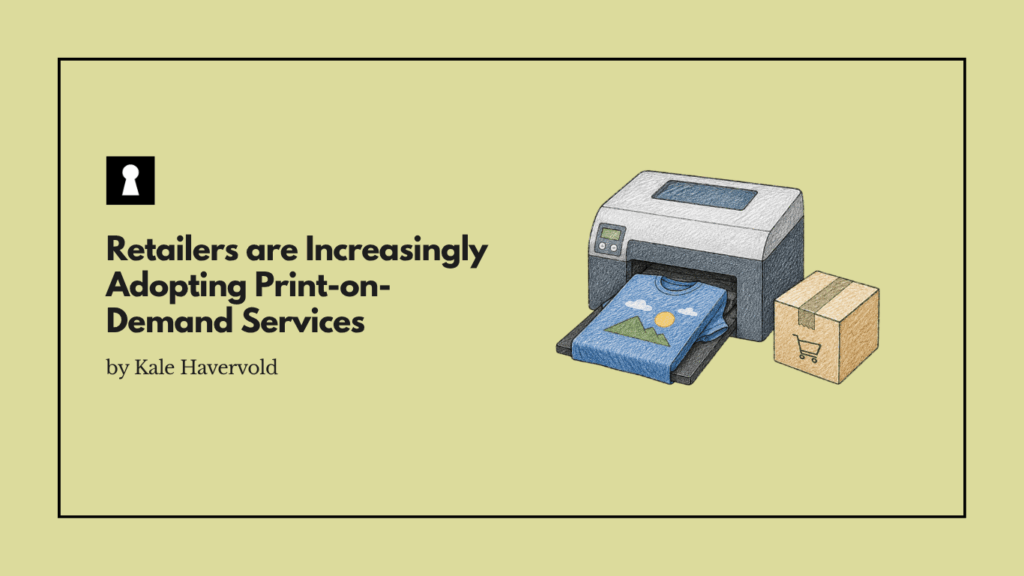
Succeeding in many modern retail environments requires ecommerce sellers to deliver items fast, minimize inventory risk, and offer a wide range of products to suit a variety of shoppers. This is especially true as personalization and customization continue to be important for buyers.
As a result, working with print-on-demand services is becoming more and more popular among these sellers. However, properly integrating these services with the ecommerce platform your brand uses is important, and can often serve as the backbone of a scalable and successful online business.
Print-on-Demand is Crucial for Many Ecommerce Sellers
Whether you’re selling on Etsy or in another similar retail environment, print-on-demand services are vital to your success. They help you offer large and diverse product catalogs, without holding mountains of inventory, while simultaneously being able to offer the rapid delivery times that customers today expect.
Buying and storing inventory is a huge risk for brands, and relying on a print-on-demand service to create your products after a sale is made eliminates this inventory risk. Using these services also lets businesses experiment with and test new designs, enjoy little to no startup costs, and offer easy personalization without handling everything in-house.
The Importance of Seamless Integration for Sellers
However, the effectiveness of how a company implements and operates a print-on-demand model depends on the integration between their ecommerce platform of choice and the print-on-demand service provider they rely on.
This integration needs to ensure that data like products and their variants, pricing, and artwork are all properly shared between your platform and the print-on-demand provider. Order data needs to flow seamlessly, and things like notifications, customer messages, and status changes also need to be synced properly.
Generally, there are three integration methods, which include native apps on your ecommerce platform for seamless, convenient, and simple integration, API-first connections for better flexibility and control, and even automation tools or middleware, which is especially useful for sellers operating in more than one place or managing multiple stores.
Whichever you choose, the goal is to ensure your integration between print-on-demand and your ecommerce platform is seamless.
The more seamless the integration, the better things like your reliability and fulfillment speed will be. A smooth connection between the two also helps you better manage data and inventory, launch products effectively, and ensure orders sync automatically.
In addition to simplifying and automating things for your business, all of this can help you deliver a better and more positive customer experience, as well.
Security and Data Protection are Paramount
In addition to ensuring the integration is smooth, make sure it’s secure. Any time you’re dealing with sensitive information like customer data, photos, designs, and other data being sent between platforms, security is crucial.
You need to ensure all data transfers are protected, that there are audit trails for each piece of data, and that access to private data is reserved only for those who need to see it to do their job. This not only helps build trust among customers, but also ensures you comply with the regulations and standards in your industry.
Hacks, phishing, and other types of ecommerce fraud are common, and if you end up leaking customer data, it could land your business in major trouble. Also, even if the leak or breach isn’t your company’s fault, consumers often hold merchants responsible for security, so don’t take it lightly.
Our Take
Make Sure to Monitor and Measure Integration Performance
As you can see, integrating print-on-demand is crucial for many types of sellers, and it relies on a smooth and seamless integration to work well. However, you can’t simply assume your integration is working well. Even if data is flowing and everything seems fine, you need to ensure you’re evaluating certain metrics and indicators.
This includes fulfillment times, error rates, sync rates, refund rates, returns, and others. Monitoring these metrics gives you insights into the quality of your integration and whether it’s working or not.