
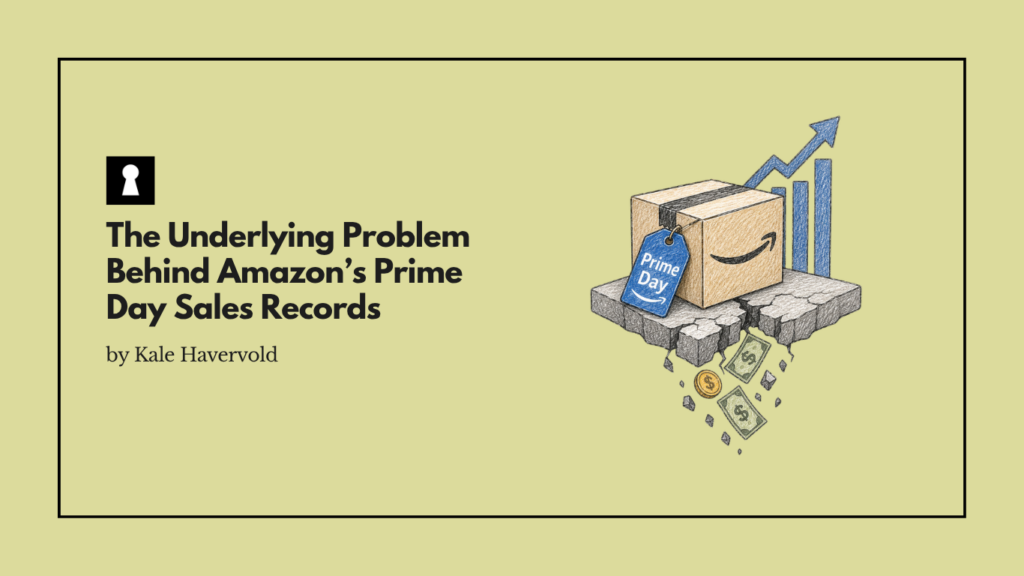
The recently ended Amazon Prime Day sale was the most successful of all time in terms of sales, reaching over $26 billion. However, with the sales being largely inflation-driven and costs increasing for sellers, these sky-high sales numbers may not be as good or important for merchants as you think.
While more sales sound good to merchants, and are great for Amazon, whether individual sellers made money or found success during the event depends on their costs, margins, and how much they would’ve sold if they weren’t a part of the Prime Day sale.
Amazon Prime Day Breaks Sales Records
Amazon’s annual Prime Day sale was hot this year, as it hit a record $26.4 billion in US online sales. This is 9.3% higher than the previous year, and the initial day of the four-day sale, June 23rd, saw $8.3 billion in US sales alone.
While shoppers bought a wide range of products during the event, some of the most popular included electronics, children’s items, tools, appliances, and essentials.
Even outside of Prime Day, sales on Amazon in general have also grown a lot, as 2025 saw a record number of sellers record over $1 million in sales, and it wouldn’t be surprising to see this number grow even higher in 2026.
Inflation Was a Major Driver of Record Sales
However, there’s a hidden truth behind these sales, and the huge numbers don’t automatically mean things are looking up for sellers on Amazon. The big reason for this is that almost half of the shoppers said that inflation made them more likely to shop during the sale.
As a result, it seems that many of the sales were driven by people searching for the lower prices to help fight off rising costs elsewhere in life, and not by a sudden increase in willingness to shop online or a rise in disposable income.
Inflation also likely had an impact on the total sales of the event, not just on how people shopped. For example, the 9.3% growth in sales compared to last year wasn’t all from more units being bought and sold, but the items themselves being more expensive this year than last due to inflation.
More Sales Doesn’t Always Mean More Profit for Businesses
While the numbers look great for Amazon and likely have some companies excited, more sales don’t automatically mean a better environment for merchants themselves. In fact, while sales were higher this year than last, so were the costs for sellers.
This is due not only to inflation but also to fee increases and the recent fuel and logistics surcharge that Amazon imposed on many sellers. Add to this the higher cost of advertising during this highly competitive event, plus the discount you apply to products to attract buyers, and you have more and more things eating away at your profits.
These last two in particular are important for brands to consider when deciding if an event like this is worth it. The question to ask yourself isn’t solely how much you sold and/or made during the event, but how much you would’ve if it weren’t on.
For example, if you had customers ready to buy from you anyway, without the Prime Day sale, marking down your prices by 20% and paying the heightened advertising costs may have hurt you more than it helped.
So while some sellers certainly experience a lot of success during Prime Day and use it to truly grow their business, for others, it works more like a glorified marketing campaign to potentially reach new customers than a way to generate real profit.
Our Take
Don’t Treat Large Events Like Prime Day As Automatic Wins
While companies can certainly find success with Prime Day sales, simply participating in these events doesn’t mean you’re automatically going to see more sales and or profit, especially when you account for things like your discounts, more expensive advertising, and heightened competition.
Instead, you need to treat participating in these events like you would any decision, and make sure that it makes financial and business sense for your unique situation. If you simply participate in the event because of FOMO, because competitors are, or just because “that’s what you do”, without doing any legwork, it could end in a disaster.
Also, it’s easy to get caught up in the huge numbers that the overall Prime Day sale does, but in reality, these don’t matter all that much to you. How much a platform generates in sales over a multi-day period has little impact on your individual business, and doesn’t tell you anything about how much you made or whether it was even worth participating in the event or not.