
Quick commerce is supposed to solve one problem, which is getting you stuff fast. It is not supposed to create a new problem, which is getting you completely fake stuff fast. Zepto apparently missed that memo.
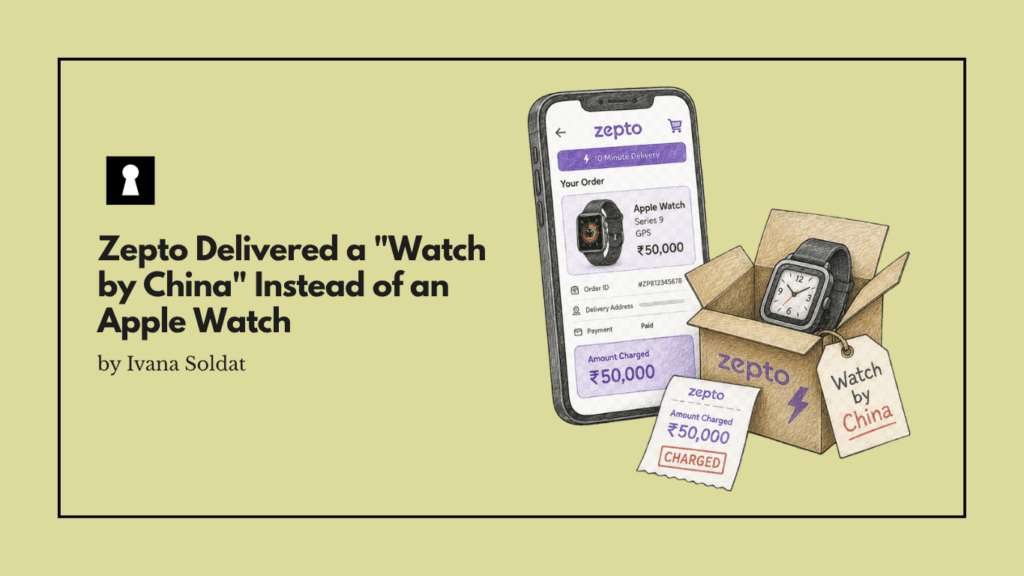
On June 15, Indian comedian and Emmy-winning actor Vir Das posted a video on X that quickly became everyone’s favorite ecommerce horror story of the day. Das had ordered an Apple Watch through Zepto, urgently for a shoot, and received what the packaging itself cheerfully described as a “Watch by China.”
He was charged ₹50,000 for it. That’s roughly $600 for a watch that probably retails for about twelve dollars on a Shenzhen wholesale site.
Das posted the video with the caption: “Am I wrong, do all apple watches look like this or is @ZeptoNow @zeptocares being shady with China copies? By the way their customer device agent on the phone said there’s nothing they could do. Full scam. We needed one quick for a shoot. They charged us 50k.”
The “there’s nothing we can do” response from customer support is doing a lot of heavy lifting there. Someone just paid ₹50,000 for counterfeit goods sold on your platform and the answer is a shrug? Bold strategy.
Zepto’s Response Was Exactly What You’d Expect
Once the post went viral, which given that Vir Das has a large following and a natural gift for making people pay attention to things took about eleven minutes, Zepto’s official account swung into action.
The platform said it had scheduled a reverse pickup and was investigating with its brand partners. It also pointed out, somewhat defensively, that high-value orders include an OTP at delivery that customers should only share after confirming the package is “properly sealed and in good condition.”
Which is technically correct advice that does absolutely nothing to address the core issue: a fake product was listed on their platform, sold as a genuine Apple Watch, and delivered to a customer who paid a real Apple Watch price for it.
The OTP tip reads less like consumer protection and more like Zepto quietly suggesting this might somehow be the customer’s fault for not inspecting a sealed package before accepting it.
This Is a Marketplace Trust Problem, Not a Logistics Problem
Here is the part that matters beyond the viral moment. Zepto, like most quick commerce platforms, operates a marketplace model where third-party sellers list products. The platform is the middleman. Which means counterfeit goods can enter the supply chain at the seller level, and the platform can claim it’s just the delivery mechanism.
That argument falls apart when you’re charging ₹50,000 and presenting a product as genuine. At that price point, in that category, the platform has some obligation to verify what it’s actually selling, not just move packages from point A to point B and invoke “standard process” when things go wrong.
This isn’t a fringe issue either. Quick commerce platforms across markets have faced recurring problems with counterfeit electronics, fake branded goods, and misrepresented products. The speed that makes these platforms valuable is also what creates gaps in quality control.
Our Take
The Real Story Here Is What Quick Commerce Platforms Are Selling You on
Quick commerce is built on a promise: anything you need, in minutes. That promise is very appealing until the thing you need is a ₹50,000 Apple Watch and what arrives is a “Watch by China” in an unironic box.
The Vir Das incident is funny because he’s a comedian with good timing and a large audience. It is less funny as a pattern. Platforms like Zepto have scaled so aggressively that marketplace governance has struggled to keep up. Sellers can list products, customers can buy them trusting the platform’s implicit endorsement, and when something goes wrong, the response is “we’ve scheduled a reverse pickup.”
The deeper issue is that quick commerce platforms are trying to be everything, supermarkets, electronics retailers, pharmacies, without building the category expertise or vendor accountability that makes those verticals trustworthy. Selling a ₹50,000 Apple Watch is not the same as selling milk. The verification standards should not be the same either.
Zepto will investigate. They’ll probably refund Vir Das, and faster than they would have if he weren’t famous. The brand partners will be consulted. A statement will be issued. And in three weeks, another anonymous customer who didn’t go viral will receive the same watch and have nowhere near the same luck getting their money back.