
There’s a very specific kind of denial that happens when a market disruption doesn’t look like a meteor, it looks like a 10-minute ice cream delivery. By the time anyone with a balance sheet notices, the habit’s already locked in.
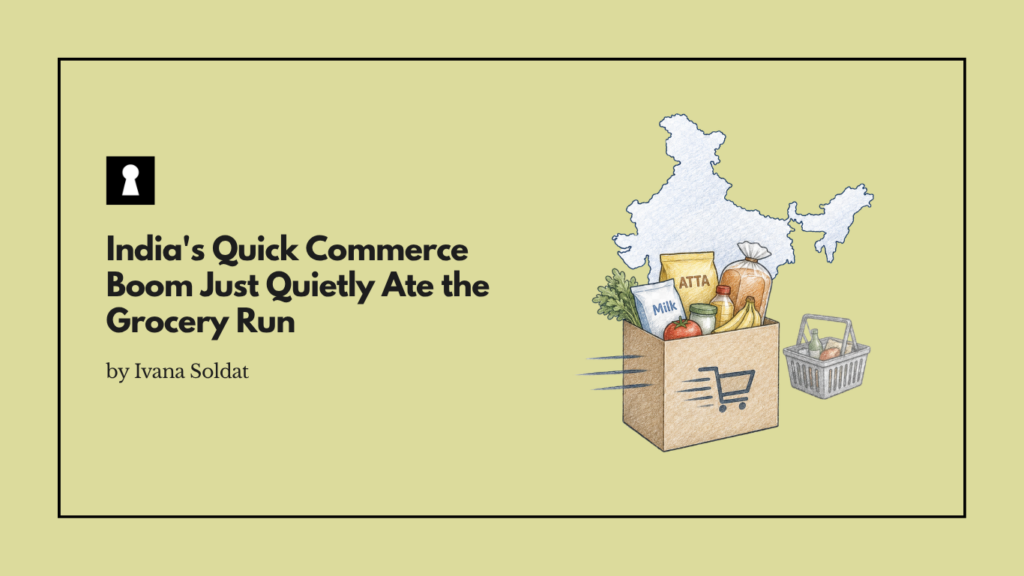
That’s roughly the story coming out of India right now, according to the June edition of the India Digital Commerce Pulse report. The headline number is blunt: quick commerce is compounding at roughly 40% year-over-year growth, more than double the pace of digital commerce overall, even as the broader marketplace model holds its scale and legacy direct-to-consumer brands cool off.
The report sizes India’s total digital commerce market at around 8 lakh crore rupees in 2026, with quick commerce now standing as its own 1.08 lakh crore rupee segment, about 13.5% of the total.
That’s still a minority slice of the overall pie. But growth rate isn’t the same as market share, and the part of this report that should actually worry the legacy players isn’t the topline number, it’s what quick commerce has done to specific categories of everyday spending.
The Daily Basket Has Already Switched Teams
The report’s framing is about as clean a thesis as you’ll find in a market research note: quick commerce now owns the everyday basket, while Amazon holds onto the considered, higher-value purchases. And the category-level numbers back that framing up hard.
According to the report, quick commerce platforms now account for 94% of online food and beverage purchases, 68% of home care purchases, 61% of personal care purchases, and 54% of baby care purchases. Two of those categories aren’t just growing, they’re exploding , the report notes quick commerce more than doubled year-over-year in home care, up 101%, and in baby care, up 105%.
Meanwhile, the traditional horizontal marketplaces, Amazon and Flipkart chief among them, still hold the largest absolute share of India’s digital commerce, accounting for roughly 4 lakh crore rupees, or 50% of the total market. But their growth is comparatively flat, and the report is explicit that the categories where they still dominate are the ones people don’t buy often: Amazon still owns electronics and kitchen-and-home goods, the higher-consideration, lower-frequency purchases.
In other words, Amazon still wins the things you research for a week before buying. It’s losing the things you buy without thinking twice.
The Infrastructure Bet Behind the Numbers
None of this growth happens without a serious physical footprint, and the report points to exactly how fast that footprint has expanded. The combined dark-store networks run by the three biggest quick commerce players, which are Blinkit, Swiggy Instamart, and Zepto, that grew to 5,026 locations in May 2026, up from 3,405 a year earlier.
That’s a deliberate land grab, and the report attributes a meaningful chunk of the category’s growth to these platforms pushing further into Tier-2 and Tier-3 cities, well beyond the metro strongholds where quick commerce first took hold.
Seasonality is doing its part too. The report flags ice cream, beverages, and face care as the categories posting the sharpest growth this season, the kind of impulse-driven, weather-sensitive purchases that are basically tailor-made for a 10-minute delivery model and badly suited to a two-day Amazon shipment.
Our Take
Amazon Still Wins the Sale. It Just Lost the Habit.
What’s actually happening here isn’t “quick commerce is growing,” it’s that an entire category of consumer behavior has quietly defected to a different business model, and the legacy platforms let it happen because the unit economics never looked attractive enough to fight for.
Amazon and Flipkart can comfort themselves with the fact that they still own the big-ticket stuff, but that’s the same comfort blockbuster retail chains told themselves about furniture and appliances right before the smaller, faster, cheaper players ate everything around them first. If you’re still building a D2C strategy around “we’ll win on selection and price,” you’re answering a question Indian consumers have already stopped asking.