
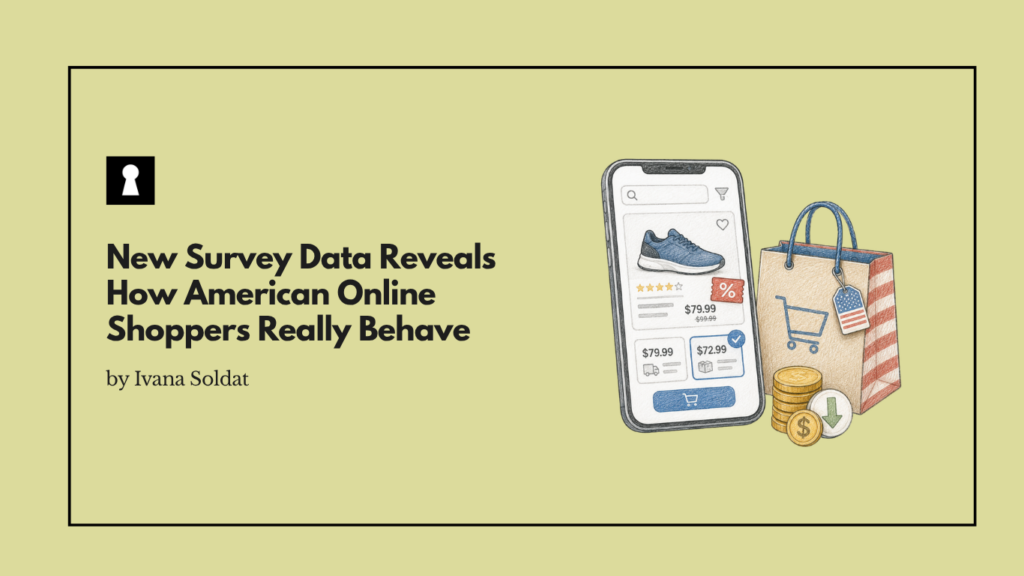
“Online shopping used to be about convenience. Now it’s a strategy.” That is the FinanceBuzz managing editor’s summary of their own survey data, and it is precise enough to be worth building an entire piece around.
The survey, conducted via Prolific in July 2026 across 2,000 US adults, produces a portrait of the American online shopper that is materially different from the one most ecommerce brands are designing for. The casual, impulse-driven, convenience-motivated shopper who clicks a Facebook ad and checks out in two minutes is not gone. But the dominant consumer behaviour the data describes is something more systematic, more deliberate, and in many ways more demanding.
93% of Americans shopped online in the last week, and the average household receives 2.9 packages per week, equating to about 150 per year. That is not occasional or supplementary commerce. That is the primary retail channel for the vast majority of American households, running at near-daily frequency.
The Free Shipping Game That Is Costing Brands More Than They Think
81% of respondents add items to their cart to hit free shipping thresholds.
This number is well-known in ecommerce circles and still underappreciated in its implications. The standard reading is positive: a free shipping threshold drives higher average order values. The less-discussed reading is that the items being added to hit the threshold are often not items the customer particularly wanted. They are filler purchases chosen for price, not preference. The customer gets their free shipping. The brand gets a return rate on those filler items that can be significantly higher than their normal average, plus the fulfilment cost of shipping them.
The behaviour also creates a specific kind of customer psychology. A consumer who has learned to search for “what can I add to get to $35” is a consumer who is price-engineering every transaction. That consumer is not experiencing the brand. They are gaming the threshold. Brands that have moved toward flat-rate or subscription-based delivery are partly responding to exactly this dynamic.
The AI Shopping Adoption That Is Not Translating to AI Trust
80% of shoppers have used AI to help make a purchasing decision, but only 7% trust AI recommendations more than customer reviews.
This is the sharpest data point in the survey and connects directly to three other pieces EcomWatch has published this month. The Shopify Q2 data showed AI-driven traffic tripling orders with 2.5 times the conversion rate of traditional search. The Alchemer holiday survey showed 48.5% of shoppers have used AI to research a purchase but only 35.4% trust AI-generated recommendations. The DHL Asia Pacific data showed 40% of shoppers using AI to find best prices while 62% refuse to let AI make purchasing decisions.
The consistent pattern across every market-level survey this month is the same: AI adoption as a research tool is high and growing. AI adoption as a trusted advisor or decision-maker is low and stagnant. The 7% who trust AI recommendations more than reviews is particularly striking. Reviews, for all their manipulation problems, still carry more authority with the American shopper than AI.
The practical implication: the Shopify AI search traffic boom is not because consumers are trusting AI to tell them what to buy. It is because AI is better at finding the right product for a specific need than keyword search is. The consumer still makes the trust decision themselves. They just get there via a smarter search tool.
The 21% Who Will Abandon Your Cart Over a Missing Payment Method
21% of respondents say they have abandoned a cart because the retailer did not offer their preferred payment method, such as Apple Pay or PayPal.
Twenty-one percent. For a single missing payment method. This number should be generating significant urgency in every ecommerce checkout team in the country.
The context is the Stripe data we covered earlier this month: $1.9 trillion in payment volume, 34% growth year over year, growing at nearly five times the rate of overall ecommerce. The payment infrastructure layer is becoming more important to ecommerce outcomes, not less, and the consumer expectation that their preferred method will be available at checkout is now high enough that its absence is a meaningful abandonment trigger.
Digital wallets such as Apple Pay, Google Pay, PayPal, compress checkout friction to near-zero on mobile, where the alternative is manually entering card details on a small screen. Any brand whose checkout does not include digital wallet options is experiencing a 21% abandonment ceiling from that gap alone.
The Behavioural Data That Is Most Useful for Q4 Planning
84% of respondents have shopped from their bed. 70% have shopped while watching TV. These behaviours are not frivolous. They reflect the completeness of mobile ecommerce integration into daily life.
The consumer who shops from bed at 11pm while watching TV is not making the same decision as the consumer who goes to a physical store. They are in a different cognitive mode. The moment of decision is less deliberate, more contextual, more susceptible to good product photography and bad UX. The 21% who abandon over a missing payment method are often that person: willing to buy in the moment, unwilling to create friction to complete the transaction.
The Q4 planning implication is straightforward: remove every possible checkout barrier for the mobile, evening, low-friction consumer who is your best customer during peak season. That means digital wallets at checkout, saved payment methods, guest checkout that does not require account creation, and delivery options that are clear and not buried in the purchase flow.
Our Take
93% of Americans Shopped Online Last Week. Only 7% of Them Trust What the AI Told Them to Buy.
The FinanceBuzz survey data is most useful when read as a description of a consumer who has become expert at the ecommerce game rather than a novice in it. The 81% who manipulate their cart to hit free shipping thresholds know exactly what they are doing. The 80% who use AI as a research tool but only 7% who trust AI recommendations over reviews have calibrated their information diet correctly.
The 21% who abandon over a missing payment method have decided their time and friction tolerance are worth protecting. This is not a naive consumer being caught by dark patterns and impulse triggers. It is a consumer who has played ecommerce long enough to develop a personal system, and whose system has specific requirements that brands either meet or do not.
The brands that are winning in this environment are the ones whose checkout, delivery, and pricing structures align with what that systematic consumer is optimising for. The ones still trying to catch a casual shopper with promotional tactics designed for a less experienced audience are running the wrong play.