
Online sellers have a new compliance deadline to worry about, and this time, it comes in the form of a button.
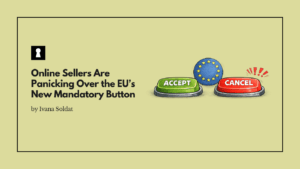
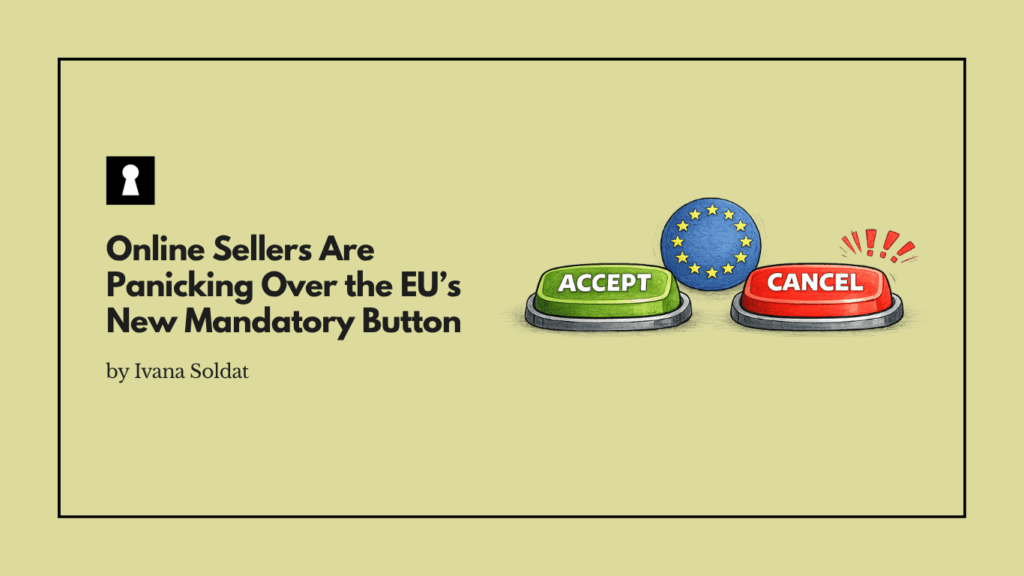
From 19 June 2026, online stores selling to consumers in the European Union will face new requirements around how customers exercise their right of withdrawal. The rule is linked to Directive (EU) 2023/2673 and is widely being described by merchants as the EU’s new mandatory withdrawal button.
The idea sounds simple: if a customer can buy online, they should also be able to withdraw from an eligible contract online, without digging through legal pages, emailing support, or searching for a form.
But in e-commerce circles, the reaction has been anything but simple.
A Reddit thread in r/ecommerce has become a snapshot of the confusion, frustration, and skepticism now spreading among merchants. Some sellers say the rule is being overhyped, especially for small US businesses that only occasionally ship to Europe. Others say it is the latest example of EU regulation making cross-border sales more expensive and less attractive. A few commenters argue the button could actually solve a real consumer problem: sellers making returns and cancellations unnecessarily difficult.
The result is a familiar e-commerce split. Consumers want easier exits. Sellers want fewer rules, fewer apps, and fewer refund headaches.
The Button That Started the Panic
The withdrawal button is not meant to create a brand-new right for consumers. EU shoppers already have a right to withdraw from many online purchases within a cooling-off period, usually 14 days.
What changes is how that right must be exercised.
Instead of relying on hidden forms, email requests, or customer support conversations, online sellers will need to provide a clear electronic way for consumers to submit a withdrawal request. In practice, that means a visible online function that starts the withdrawal process, includes a confirmation step, and gives the customer proof that the request was received.
That may sound like a minor design change, but for merchants it can touch several parts of the business: order management, customer accounts, guest checkout, refunds, returns, email confirmations, customer support, and legal documentation.
It also creates an immediate question for platforms like Shopify, WooCommerce, and custom-built stores: who is responsible for building the feature, the platform or the merchant?
Reddit Sellers Are Already Picking Sides
The Reddit thread that brought attention to the issue began with a warning: EU stores had only days to add a mandatory cancellation button, and many had not heard about it.
The post argued that the rule applies not only to EU-based sellers, but also to businesses outside the EU that sell to European consumers. That includes US and UK stores that target or serve EU customers.
That point immediately triggered pushback.
One commenter argued that a small US store with no EU presence and only occasional European orders should not be overly worried. In their view, enforcement would likely focus on larger companies with assets, operations, or meaningful business inside Europe.
Another user took the same position more bluntly, saying they were “not buying in to a panic,” and that other small US e-commerce businesses should not either.
That skepticism reflects a broader feeling among some non-EU sellers: the EU can pass rules, but enforcing them against a small foreign business with limited EU exposure may be difficult in practice.
But other sellers were less relaxed. Some said they would rather stop selling to the EU than deal with yet another compliance requirement. One commenter said they had turned off all EU countries and planned to explain the decision to European visitors. Another said they would stop selling directly to consumers in Europe and instead supply distributors, even if that meant higher prices for customers.
That reaction matters because it shows the real-world tension behind consumer regulation. A rule designed to help shoppers may also push some smaller sellers away from the market entirely.
“Just Add a Button” Is Not the Whole Story
For many merchants, the button itself is not the scariest part. The bigger concern is what happens after a customer clicks it.
Sellers in the Reddit thread raised questions about transaction fees, bots, fraud, luxury vintage clothing, digital products, print-on-demand goods, custom engraving, blind-box products, and orders that have already shipped.
One seller asked what happens if a customer buys a vintage designer gown, wears it, and then uses the withdrawal process to return it. Another worried about malicious bots placing orders and cancelling them quickly, leaving the store to absorb payment processing fees. A digital product seller asked how the rule could work when the buyer receives the file immediately after purchase.
These are not abstract concerns. Returns and cancellations are already some of the most expensive and operationally messy parts of e-commerce.
A normal customer support issue can become a refund dispute. A refund dispute can become a chargeback. A chargeback can create fees, lost time, and payment processor scrutiny. For small merchants, even a small increase in unnecessary cancellations can feel significant.
That is why the withdrawal button has become a symbol of something bigger than compliance. It represents sellers’ fear that regulators are making the buying experience safer for consumers while making the selling experience riskier for small businesses.
The Refund Nightmare Sellers Are Worried About
The most emotional reactions are coming from sellers who already see returns as a weak point in their business.
For physical products, especially apparel, sellers worry that a clearer withdrawal path could lead to more returns from customers who change their mind after receiving the item. For secondhand or vintage clothing sellers, the worry is sharper: how do you prove a customer wore a dress once and sent it back?
For digital products, the question is different. If a customer downloads an ebook, template, course file, or design asset immediately after purchase, what exactly is being “returned”? Digital delivery has always complicated consumer withdrawal rights, and the button does not magically solve that tension.
For print-on-demand and custom goods, the issue becomes whether the product is truly personalized or simply produced after purchase. A shirt with a fixed design selected from a catalogue may be treated differently from a product engraved with a customer’s name.
The Reddit thread shows how quickly a simple compliance requirement turns into a product-by-product legal puzzle.
That is one reason sellers are frustrated. They are not just asking where to place a button. They are asking whether the button opens the door to refund abuse, operational delays, and disputes they are not equipped to handle.
Why Some Merchants May Simply Block EU Customers
Some sellers in the thread said the rule could push them to stop selling into the EU altogether.
That may sound extreme, but for small cross-border merchants it is not hard to understand. Selling internationally can already mean customs problems, VAT questions, import duties, shipping delays, payment disputes, return costs, and customer confusion.
Add one more compliance requirement, and some sellers decide the extra revenue is not worth the friction.
That is especially true for merchants who get only a small percentage of their sales from Europe. For them, blocking EU countries may feel easier than installing another app, updating legal pages, testing a new flow, and worrying about whether the implementation is good enough.
The irony is obvious. A rule designed to improve the consumer experience could make some foreign sellers less willing to serve EU consumers at all.
That does not mean the rule is wrong. But it does show the trade-off regulators often underestimate: when compliance becomes too complex, small businesses do not always adapt. Sometimes, they leave.
The Consumer Case for Making Cancellations Easier
The Reddit thread was not only filled with seller complaints.
One commenter defended the idea by describing a bad return experience where a seller made the process difficult and left the consumer without a clear record. Their argument was simple: if there had been a button, the ambiguity would have disappeared.
That is the consumer protection logic behind the rule.
A timestamped withdrawal request creates evidence. It can protect shoppers from sellers who ignore emails, claim a return request was never received, or make the process unnecessarily confusing.
It can also protect legitimate sellers. A structured withdrawal flow can create a clearer record of what the customer requested, when they requested it, which order it applied to, and what happened next.
In that sense, the withdrawal button is not only a consumer tool. If implemented properly, it can also reduce disputes by replacing messy back-and-forth emails with a documented process.
The problem is that many sellers do not trust the regulation to be that clean in practice.
Small Sellers Feel Like They Are Paying for Big Tech’s Bad Behavior
A large retailer can assign the issue to a legal team, a compliance team, and a development team. A small online store may have none of those things.
That is where much of the anger comes from.
For a small Shopify store, the practical solution may be installing yet another app. For WooCommerce sellers, it may mean adding a plugin or hiring a developer. For custom stores, the answer may be more technical work, testing, and legal review.
Some sellers are also frustrated because this rule arrives after years of other EU-related requirements. GDPR, VAT rules, GPSR, marketplace compliance, product documentation, customs issues, and local consumer rules have already made Europe feel complicated for many cross-border merchants.
The withdrawal button is now being seen by some sellers as one more layer on top of an already heavy stack.
That does not mean the rule is impossible to follow. In many cases, the technical build may be relatively small. But the emotional reaction is not just about one button. It is about compliance fatigue.
The Panic Is Real, But Not Always Rational
The panic is partly justified, but not always for the reasons sellers think.
The rule does not mean every customer can cancel every purchase at any time. It does not erase existing exceptions. Custom-made goods, certain digital products, sealed goods, and other categories may still be treated differently depending on the facts and national implementation.
It also does not mean a seller must instantly refund every order the second a customer clicks the button. In many cases involving physical goods, the refund process still depends on the return of the goods or proof that the customer has sent them back.
But the panic is justified in one important sense: sellers cannot simply assume that their existing return page or contact form is enough.
The rule is about making withdrawal easy, direct, and documented. A vague “contact us” link may not meet that standard. A buried legal page may not meet that standard. A process that only works for logged-in users may not be enough if the store allows guest checkout.
The businesses most exposed are not necessarily the ones with the highest return rates. They are the ones that have no clear withdrawal workflow at all.
Is This Really Enforceable Outside Europe?
The Reddit thread also shows a deeper divide between EU regulation and global e-commerce.
Many online sellers operate internationally by default. A Shopify store in the US can receive an order from Germany without thinking of itself as a European business. A UK brand can ship to France while still treating Europe as a secondary market. A niche merchant may get only a handful of EU orders each month.
For those sellers, the question is not only “What does the law say?” It is “What is the realistic risk?”
Some Reddit commenters argued that enforcement against small foreign sellers is unlikely. Others warned that platform and payment processor pressure could become a problem if regulators focus on the infrastructure layer rather than individual merchants.
Both points can be true at the same time.
A tiny US store with occasional EU sales may face lower practical enforcement risk than a large brand actively targeting European consumers. But if a store is meaningfully selling into the EU, ignoring consumer law entirely is not a serious long-term strategy.
The more a business depends on EU customers, EU payment processing, EU logistics, EU advertising, or EU platform infrastructure, the harder it becomes to treat the rule as someone else’s problem.
What Stores Need to Fix Before the Deadline
Online sellers should start with a basic scope check.
Do they sell to EU consumers? Do they actively target EU markets? Do they offer products or services that include a statutory right of withdrawal? Do they allow guest checkout? Do they already have a clear digital withdrawal process?
If the answer is yes, they should review whether their current process is visible, direct, and documented.
A compliant flow may need to let customers identify the order, submit a withdrawal request, confirm the action, and receive an automatic acknowledgement. It should also connect to the store’s internal refund and return processes.
Sellers should also review product exceptions carefully. Personalized goods, custom-made products, instant digital delivery, rentals, subscriptions, and sealed or time-sensitive products may require different treatment.
This is not an area where stores should rely only on a random app description or a Reddit comment. Platform tools may help, but legal responsibility usually sits with the business.
The Bigger Warning for E-Commerce
The withdrawal button is part of a wider shift in online retail.
For years, e-commerce has been optimized around making purchases faster. One-click checkout, saved cards, urgency messages, subscription flows, and frictionless payment tools all serve the same goal: getting the customer to buy.
Now regulators are asking why exercising consumer rights should be harder than making a purchase.
That is why this button matters. It is not just a compliance feature. It is part of a broader push against hidden friction, dark patterns, and post-purchase confusion.
Sellers may hate the implementation. Many small businesses are right to complain that regulatory burdens often hit them harder than major retailers. But the principle behind the rule is difficult to ignore: if a store makes it easy to enter a contract, it should not make it unnecessarily difficult to exit one when the law allows it.
Our take
If Buying is One Click, Cancelling Should Not be a Maze.
The backlash to the EU withdrawal button is understandable. Small sellers are tired of compliance costs, platform gaps, app fees, and rules written as if every online store has a legal department.
But the anger also exposes an uncomfortable truth about e-commerce: too many businesses have spent years perfecting the path to purchase while neglecting the path out.
That imbalance was always going to attract regulators.
The smartest sellers will not treat the withdrawal button as just another annoying legal widget. They will treat it as a warning that the post-purchase experience is becoming part of the regulated customer journey.
The businesses that make cancellation and withdrawal clear, documented, and easy to understand may not just avoid trouble. They may also earn more trust.
The ones that keep hiding the exit door should not be surprised when regulators force them to put a sign on it.