When the Supreme Court ruled earlier this year that the International Emergency Economic Powers Act did not give the president authority to impose tariffs, it created an immediate accounting question for every major US retailer and importer: what do we do with the money we paid?
The Trump administration certified $100 billion in tariff refunds as of July 31, out of the $166 billion it collected under IEEPA. The refunds are real, they are large, and they are landing on the balance sheets of America’s biggest retailers and logistics companies right now.
What happens next, whether that money goes back to the consumers who ultimately paid the tariff costs through higher prices, or gets absorbed as margin improvement, is the question now splitting the Fortune 500 into two camps.
The Companies Keeping It
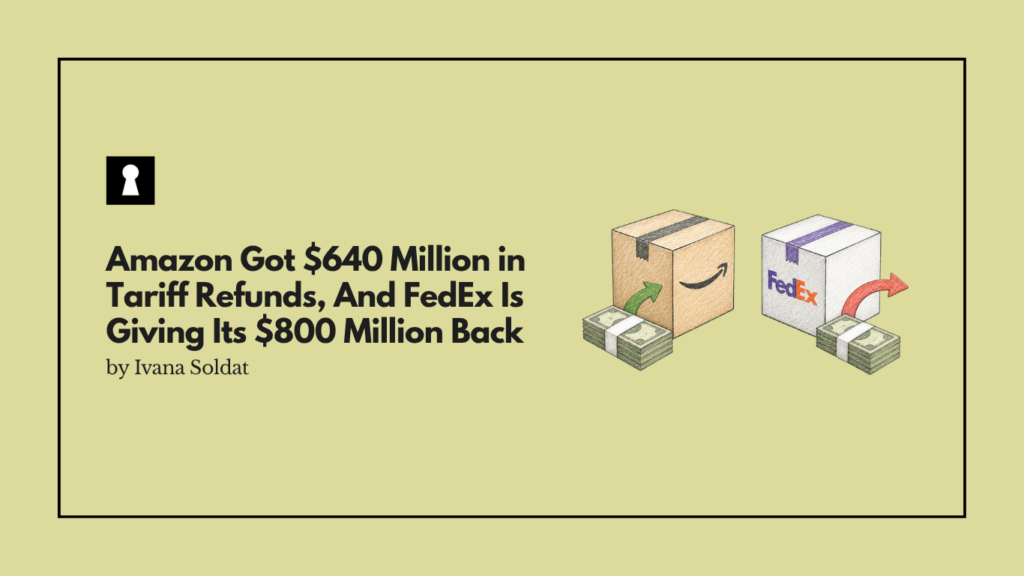
Amazon said it received approximately $640 million in tariff refunds during Q2 2026, representing the significant majority of refunds it expects to receive. Amazon has said it may offer refunds to only a limited number of customers impacted by the tariffs.
“May offer refunds to only a limited number of customers” is doing considerable work in that sentence. Amazon processed billions of transactions during the IEEPA tariff period. The customers who paid elevated prices on imported goods did so because Amazon passed on the tariff costs. The company has now received the majority of those costs back from the government. The plan to refund “a limited number of customers” is not a refund program. It is a liability management strategy.
Target received $994 million in tariff refunds during Q2 2026, adding $752 million to net earnings. Target CFO Jim Lee confirmed the company will not issue refunds to customers but will use the money towards bringing lower prices.
The “lower prices going forward” commitment is the most common response from large retailers. Lower prices going forward benefit future customers — including future customers who never paid higher prices during the tariff period. They do not compensate the specific customers who paid elevated prices during the IEEPA period. The distinction matters legally, which is why the class action landscape is developing the way it is.
Nike expects to recover $986 million in total and has remained quiet on whether consumers will see any refunds, even as consumers sue the company for not refunding tariff-related costs. Apple disclosed that its tariff refunds added approximately two percentage points to its fiscal third-quarter gross margin and said it will invest the money into domestic manufacturing.
The Companies Giving It Back
FedEx is a different case. The company said its reported cash balance included approximately $800 million in IEEPA tariff refunds, but that money was being held for refunds to customers. FedEx has begun returning refunds and has a dedicated IEEPA refund portal at ieepa-refunds.fedex.com. FedEx previously sued the federal government seeking a full refund of tariffs it had paid.
FedEx’s position is the clearest expression of the consumer refund argument: we collected money from our customers because the government required it, the government has now acknowledged that requirement was illegal, so the money goes back to the customers who paid it. The logic is straightforward and the execution is concrete.
Costco said it would issue tariff refunds to consumers after being hit with four class action lawsuits alleging the company passed on the tariff costs and raised prices. Costco’s refund commitment came after the lawsuits, which is a relevant sequencing detail. FedEx committed to returning money without being forced to by litigation. Costco committed after being sued four times.
The Legal Dimension
The class action landscape is developing rapidly. Nike is being sued. Costco was sued and committed to refunds. Amazon’s limited refund posture will almost certainly generate litigation given the scale of the discrepancy between what it received and what it is returning.
The legal theory in these cases is not complicated: if a company raised prices during the IEEPA tariff period citing tariff costs, and it has now received those tariff costs back from the government, consumers who paid elevated prices have a claim to participate in the refund. The companies arguing against consumer refunds are essentially arguing that the tariff costs were absorbed in their cost structure rather than passed through as price increases, a harder argument to make for companies that publicly cited tariffs as a reason for price increases.
The Ecommerce Merchant Layer
The Fortune coverage focuses on Fortune 500 companies, but the tariff refund question applies at every level of the retail stack. We covered this last month when we wrote about American Eagle selling $68.9 million in tariff refund claims for $18.6 million in cash, 27 cents on the dollar, because the company needed liquidity before the refunds arrived.
The difference between American Eagle’s desperation sale of future refunds at 27 cents on the dollar and Amazon’s $640 million refund received at full value is a measure of how differently the tariff period landed across company sizes.
Large, cash-rich companies waited for full refunds and are now deciding how much to keep. Smaller, cash-strapped companies sold those same refunds at steep discounts to survive the period.
Our Take
$100 Billion Refunded. Most of It Is Not Going Back to the People Who Paid It.
The tariff refund distribution is playing out exactly as the corporate incentive structure would predict. Companies with the best legal teams are crafting the most defensible language about “investing in lower prices” and “limited customer refunds.” Companies facing class action lawsuits are committing to consumer refunds under legal pressure.
FedEx, which has a straightforward pass-through business model and sued the government itself for the money, is simply returning it. The consumers who paid higher prices during the IEEPA tariff period are not a constituency that most Fortune 500 companies feel obligated to compensate without litigation or regulatory compulsion.
The ones who will receive refunds are the ones whose companies were sued into providing them, or who happened to be FedEx customers. Everyone else is getting the “we’re investing in lower prices” letter, which is a different thing entirely.