
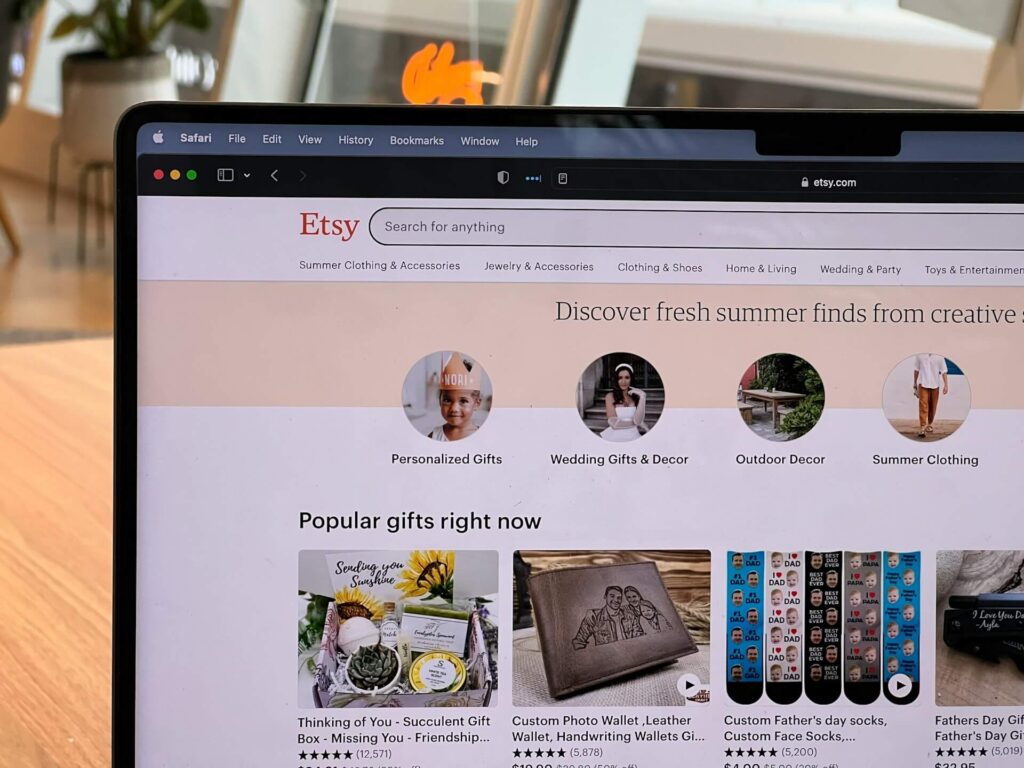
Etsy is running a targeted Extra Perk Promo through May 11, 2026, offering a $5 credit toward future purchases when shoppers spend at least $45.
The promotion, which does not require a coupon code, comes ahead of Mother’s Day on May 10 and is part of the marketplace’s ongoing effort to reactivate lapsed buyers rather than invest heavily in acquiring entirely new customers.
According to the terms published in Etsy’s House Rules, the offer is available for seven days from when it is first shown to a recipient. The $5 credit is applied automatically after the order payment processes and expires 90 days from the order date. The promotion applies only to merchandise value, excluding taxes and shipping, and is limited to one use per eligible buyer.
The company updated the promotion terms on April 15, 2026, suggesting the campaign was planned well in advance of the Mother’s Day shopping window.
Etsy Turns Seasonal Demand Into a Repeat-Purchase Play
Etsy has increasingly leaned on targeted, platform-funded promotions to drive repeat purchases from existing buyers. The company stated in recent earnings calls that reactivating lapsed customers delivers better return on investment than acquiring new ones, a strategic shift that reflects broader pressures on customer acquisition costs across ecommerce.
Just one week before launching this Mother’s Day promo, EcommerceBytes reported that Etsy was offering $5 coupons to subsets of inactive shoppers as part of its reactivation strategy. The timing of the Extra Perk Promo suggests Etsy is layering multiple promotional tactics during high-value seasonal moments, using one offer to drive immediate sales and another to create future purchase incentives.
Mother’s Day consistently ranks among the top five retail events in the United States, with shoppers seeking personalized and handmade gifts. For Etsy, which positions itself as a marketplace for unique and artisan goods, the holiday represents a critical revenue opportunity.
The $45 minimum spend threshold aligns closely with typical gift budgets for the occasion, while the delayed $5 credit creates a retention hook that brings buyers back after the holiday rush subsides.
The Promotion Changes Seller Incentives Even Without Direct Cost
Etsy sellers do not fund this promotion directly, which distinguishes it from seller-initiated coupon campaigns or the platform’s offsite advertising fees. However, the promo still affects merchant operations and strategy in several ways.
The $45 spending threshold may push buyers toward higher-value items or encourage multi-item baskets, potentially benefiting sellers with product lines that cluster around the $20 to $50 range. Sellers offering lower-priced items may see increased cart abandonment if shoppers cannot easily reach the $45 threshold within a single shop, though cross-shop purchases still qualify.
The timing creates a compressed window for sellers to optimize inventory, listings, and fulfillment capacity. With the promotion ending May 11 and Mother’s Day falling on May 10, most orders placed under the promo will require expedited processing to arrive on time. Sellers who cannot guarantee fast turnaround or who face delays in production may miss out on conversion despite the traffic boost.
The $5 future credit also introduces a retention dynamic that extends beyond the immediate sale. Buyers who receive the credit are more likely to return to Etsy within the 90-day window, creating a secondary traffic opportunity for sellers. However, this also means sellers compete not just for current holiday spend but for that deferred $5 purchase, where margins may be tighter.
Unlike Amazon and Shopify, Etsy Is Funding the Incentive
Etsy’s approach contrasts with Amazon, which typically runs site-wide deals and Prime-exclusive discounts rather than targeted credit offers tied to future purchases. Amazon’s strategy prioritizes immediate conversion and Prime membership retention, while Etsy’s model focuses on buyer lifetime value and re-engagement at lower cost.
Shopify merchants, by comparison, control their own promotional calendars and typically do not participate in platform-wide campaigns unless they opt into apps or affiliate networks. This gives them more flexibility but also places the full cost and risk of promotions on individual sellers.
Etsy’s decision to fund the promo itself reflects the platform’s need to drive demand without alienating sellers who have criticized past fee increases and offsite ads policies. By covering the cost of the $5 credit, Etsy avoids the blowback that often follows mandatory seller-funded discounts, though sellers still absorb the operational strain of higher order volumes.
What the Extra Perk Promo Could Change for Sellers
Sellers active on Etsy during this period should monitor several factors closely. Order velocity may spike in the days immediately before May 10, particularly if buyers perceive a last-minute gifting urgency. Shops that communicate clear processing times and shipping deadlines in listings and shop announcements will be better positioned to manage expectations and avoid negative reviews from late deliveries.
The 90-day lifespan of the $5 credit means a second wave of purchases could arrive between mid-May and early August. Sellers should track whether post-promotion orders convert at similar rates and average order values, or if the $5 credit drives lower-margin, single-item purchases. This data can inform decisions about participating in future seller-funded promotions or adjusting pricing strategies around Etsy’s promotional calendar.
Sellers should also watch for any communication from Etsy about how the Extra Perk Promo affects search ranking or ad placement. If the platform prioritizes listings that are more likely to help buyers hit the $45 threshold, shops with complementary product assortments or higher price points may see outsized visibility during the promotional window.
Outlook
Etsy’s reliance on targeted, platform-funded promotions signals a continued focus on efficiency over growth at all costs. If the Extra Perk Promo successfully reactivates a meaningful segment of lapsed buyers and drives repeat purchases within the 90-day credit window, expect Etsy to deploy similar mechanics around Father’s Day, back-to-school, and the winter holidays.
For sellers, the key question is whether these promotions generate sustainable demand or simply shift purchases forward in time. The answer will depend on how well Etsy converts credit recipients into habitual buyers and whether the platform continues to fund incentives that keep acquisition costs in check without eroding seller margins.