There’s a moment every online shopper has had: you see someone in your feed who isn’t famous, isn’t selling anything in any obvious way, just genuinely seems to love a product, and that quiet, unbranded enthusiasm is exactly what makes you click “buy.”
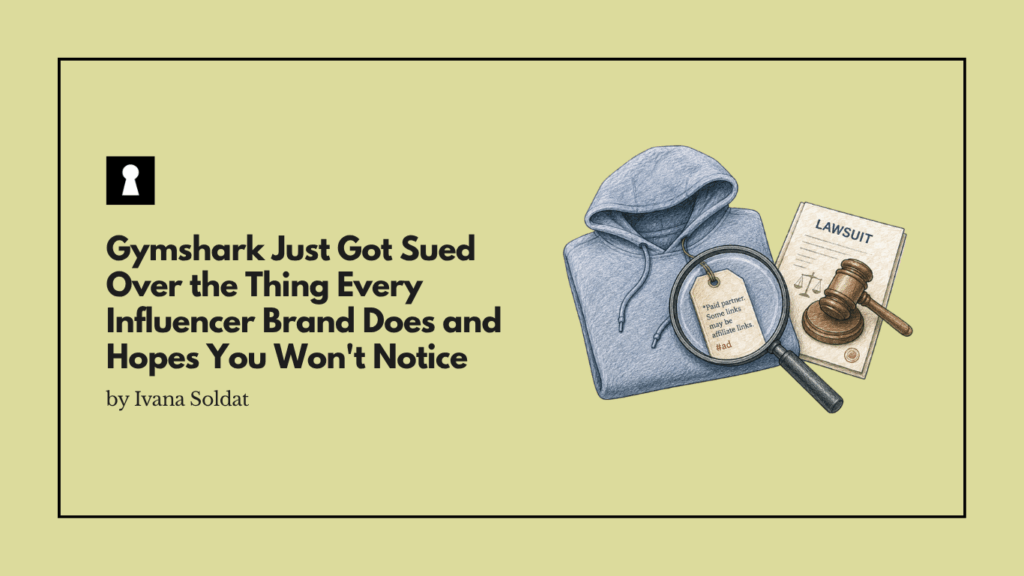
A new lawsuit argues Gymshark turned that moment into a business model, and did it by paying people to fake the part where they’re not selling anything.
The complaint, filed June 16 in the Southern District of New York by plaintiff Mihaela Lupea, lays out a fairly simple allegation underneath all the legal scaffolding: Gymshark built an army of fitness influencers, locked many of them into exclusive contracts, paid them in cash, free product, or affiliate commissions, and then let, or told, them skip the “#ad” or “Paid Partnership” label that’s been federally required since the FTC’s Endorsement Guides went into effect years ago.
The Math Behind “Just an Honest Recommendation”
The lawsuit’s actual financial argument is the part worth sitting with. It’s not simply “Gymshark broke a disclosure rule.” It’s that the absence of disclosure changes how much a product is worth.
Buried disclosures don’t just dodge a technicality, they let a post get treated by viewers, and by the platform’s own algorithm, as organic content instead of an ad, which means more reach, more perceived authenticity, and ultimately a price tag inflated by a halo effect that never would have existed if people knew they were looking at a paid script.
The complaint leans on outside academic research to back this up, citing studies on undisclosed promotional content that found it shifts buyers toward lower-quality purchases and erodes consumer welfare measurably for every dollar spent.
The complaint also points to something that’s hard to spin as accidental: Instagram and TikTok’s own algorithms reportedly deprioritize content labeled as a paid partnership, so skipping the label isn’t just a disclosure failure, it’s allegedly a deliberate growth hack, one that happens to also be illegal.
The Receipts: Specific Influencers, Specific Posts
What makes this complaint sharper than the average “your ads were misleading” filing is that it doesn’t gesture vaguely at “influencer marketing.” It names names, pointing to posts from creators including Whitney Simmons and Annabel Lucinda as examples where Gymshark gear shows up styled as personal lifestyle content, with no #ad tag and no Paid Partnership label in sight.
The suit also points to Gymshark’s own litigation history as evidence the company knew exactly what it was doing: it previously sued a former brand ambassador for promoting a rival label while under contract, which the complaint frames as proof Gymshark was perfectly capable of enforcing influencer obligations, just not the one that involves telling customers when they’re being sold to.
The suit draws an explicit contrast with competitors like SKIMS, Nike, and Lululemon, citing a National Advertising Division case in which SKIMS confirmed it requires contractual, monitored disclosure from paid creators, the implication being that proper disclosure isn’t some unreasonable ask in this category, it’s the industry norm Gymshark allegedly chose to skip.
Our Take
Your Sponsored Best Friend Was a Pitch Deck the Whole Time
The uncomfortable truth this case puts a spotlight on is that almost the entire creator economy is built on the same blurred line Gymshark is being sued over, and the only thing separating “influencer marketing” from “undisclosed advertising” in a lot of cases is whether a brand got specific enough in its instructions for a lawyer to later find the paper trail.
Gymshark’s real mistake here wasn’t running influencer marketing, everyone in this category does that, it’s that it got big enough, and sloppy enough, for someone to actually go count the missing hashtags.