
There are tens of thousands of UK-based businesses selling on Amazon, eBay, and Etsy who are not meeting their VAT obligations. HMRC knows this. The estimated tax gap from marketplace non-compliance runs into hundreds of millions of pounds per year. The question the government has been wrestling with is not whether this is a problem but how to fix it when chasing individual sellers at scale is essentially impossible.
The answer HMRC has landed on is to stop chasing the sellers and go straight to the platforms.
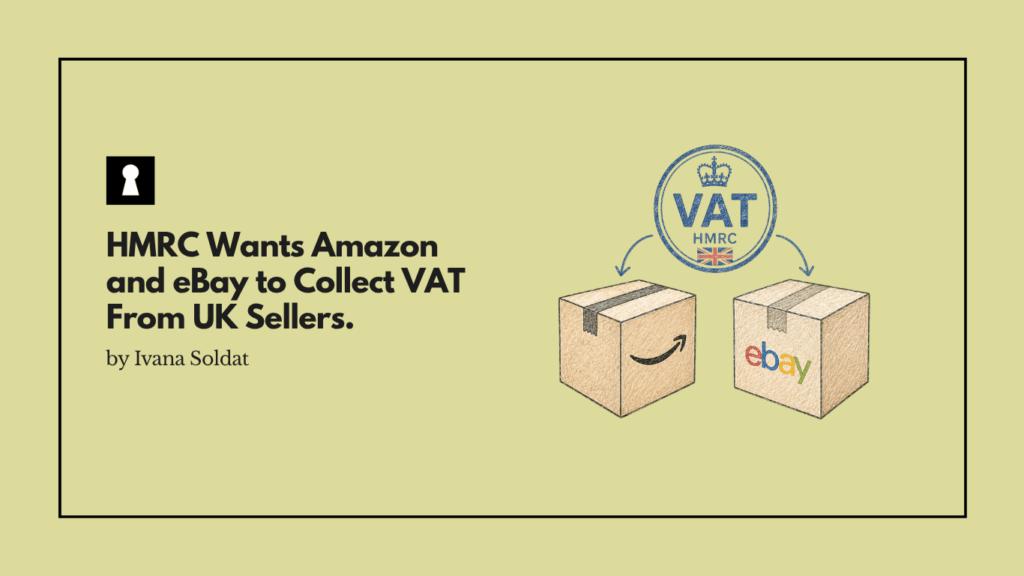
A joint consultation from HM Treasury and HMRC, titled “Extending VAT Online Marketplace Liability to Combat Non-Compliance,” opened on June 23 and runs until August 18, 2026. It proposes extending existing marketplace VAT liability rules, which already require platforms to account for VAT on sales by overseas sellers and low-value imports, to cover sales by UK-established sellers too.
If this goes ahead, it would be the biggest change to UK marketplace VAT since the 2021 reforms. And unlike the 2021 reforms, which largely affected overseas sellers, this one lands squarely on domestic businesses.
The Mechanism Is Actually Quite Elegant, If You Are HMRC
Here is how the proposal would work in practice. Currently, if you are a VAT-registered seller on Amazon, you charge VAT on your sales, collect it from the customer, and pay it to HMRC yourself.
Under the proposed model, Amazon would become the deemed supplier for VAT purposes. You would make a zero-rated supply to Amazon. Amazon would then charge the end customer VAT and account for it directly to HMRC on its own VAT return. You never touch the VAT on that transaction.
The logic from HMRC’s perspective is airtight. Platforms already know what is being sold, at what price, and to whom. They process the payments. Making them responsible for the VAT on those transactions removes the human step in the chain where non-compliance currently lives. A seller who forgets, or chooses, not to declare their marketplace income cannot dodge VAT if the platform is already accounting for it before the money reaches them.
The Sellers Who Should Be Sweating Right Now
Not everyone is affected equally. The proposal covers only business-to-consumer sales of goods where the goods are already in the UK at the point of sale. B2B transactions are out of scope. Sales through your own website stay under your own VAT accounting. Physical shop sales are unaffected. It is specifically the marketplace channel, for goods sold to consumers, where everything changes.
Sellers close to the £90,000 VAT registration threshold who sell across multiple platforms need to pay close attention, because the proposed liability threshold is per platform, not combined turnover. A seller doing £80,000 on Amazon and £40,000 on eBay has £120,000 in combined turnover and should already be VAT registered, but under the per-platform model, each marketplace would only switch on liability once that specific platform’s sales cross the threshold.
Sellers using the VAT Flat Rate Scheme are in a particularly awkward spot. If marketplace sales move to a deemed-supply model, Flat Rate Scheme sellers could lose the ability to apply their flat rate percentage to that portion of income. HMRC has specifically flagged this as an open question. If your scheme membership and your marketplace sales are both significant, this needs reviewing now.
Sellers of second-hand goods using the Margin Scheme, where VAT is calculated on profit rather than selling price, face a similar problem. The deemed-supply model does not fit neatly with margin-based accounting, and HMRC is still working out whether to exclude second-hand marketplace sales or find another way around it.
Takeaway Platforms Got Caught in the Net Too
The consultation explicitly names takeaway food delivery platforms in scope. For platforms like Just Eat or Deliveroo, and the restaurants and takeaways using them, this is a more disruptive shift than for Amazon or eBay, which have been running complex VAT logic for international sellers since 2021.
A local restaurant using Deliveroo has never had to think about deemed supplies and zero-rated transactions. They may have to soon.
HMRC Still Has to Solve the Small Seller Problem
The thorniest question in the consultation is how to protect sellers below the VAT registration threshold from being swept into a system designed for registered businesses.
Two options are on the table: a minimum platform threshold of £90,000 where marketplace liability only kicks in above that level on each specific platform, or a VAT rate relief for smaller sellers below the threshold. Neither is confirmed.
The consultation closes August 18 and is genuinely asking for input, which means there is still time to respond if you have a stake in the outcome.
Our Take
No Law Yet. But the Direction Is Unmistakable.
The HMRC consultation is not law yet and may change significantly before it becomes one. But the direction of travel is clear and has been building for a while: governments that cannot efficiently chase individual marketplace sellers at scale are going to make platforms do the collection instead.
The UK is doing it. The EU already did a version of it with the 2021 import VAT reforms. Australia did it in 2018. The logic always wins eventually because it is operationally simpler than the alternative.
For UK sellers the question is not whether this is coming but what it means for their specific situation, VAT registration status, platform mix, scheme membership, product type, before the rules arrive. The deadline to have any input on the shape of those rules is August 18. After that, the consultation closes and the government starts drafting legislation.