
Pinterest has always had a bit of an identity problem. Is it a mood board? A search engine? A place where people pin recipes they’ll never make?
The answer, apparently, is none of the above, it’s now an Amazon storefront with better fonts.
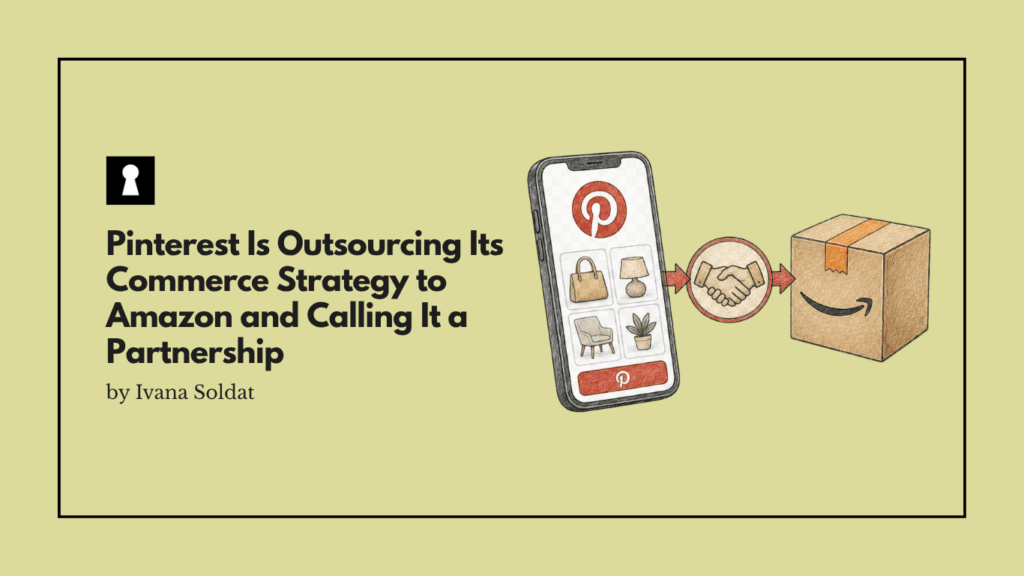
Pinterest just announced it will now serve as a home for creators’ Amazon Storefronts, personalized shopping pages where influencers showcase products and earn commissions through affiliate links.
The whole thing is automated to the point of being almost suspiciously easy: once a creator links their Amazon Storefront to their Pinterest account, an affiliate link is automatically attached whenever they tag a matching Amazon product. Pin it, tag it, get paid.
This Romance Has Been Building for Years
Nobody should be shocked by this. Pinterest and Amazon forged a multi-year ads partnership back in 2023, followed by a similar deal with Google the year after. And just last week, Pinterest committed a rather serious $4 billion to AWS through 2031, pledging to use Amazon’s custom silicon chips to power its AI roadmap and supercharge its visual search and discovery platform.
At this point, Pinterest and Amazon are essentially roommates who share a fridge, split the rent, and have each other’s passwords. Pinterest just made it official on Facebook, except on Pinterest, obviously.
Why Creators Should Care
The move is clearly aimed at creators who’ve built their entire shopping and affiliate empires on platforms like Instagram, TikTok, YouTube, and Facebook, people who’ve never really considered Pinterest a place where money happens.
Pinterest wants to change that perception, and it’s using cold hard affiliate cash to do it. The platform says more than half its users visit specifically to shop, and it processes over 80 billion searches every month. That’s genuinely not a bad pitch for a creator who’s tired of the TikTok algorithm treating them like a seasonal employee.
The AI Slop on Pinterest
Over the past year, Pinterest has faced serious user backlash over the growing flood of AI-generated content, commonly referred to as “AI slop.” Despite rolling out tools to identify and manage the problem, the complaints haven’t gone away.
And so Pinterest’s solution, apparently, is to lure real humans back to the platform with the promise of Amazon affiliate revenue. The Amazon Storefront integration suggests the company is doubling down on human creator recommendations as a way to improve content quality and shopping engagement.
That’s one way to fix a trust problem.
A Smart Division of Labor, or Just Dependency With Extra Steps?
There are two ways to read this deal.
The optimistic take: by leaning into Amazon, Pinterest avoids having to build a full-stack retail operation, no inventory, no fulfillment, no customer support nightmares. It gets to focus on discovery, personalization, and creator tools while Amazon handles all the actual commerce infrastructure. Clean, sensible, efficient.
The pessimistic take: Pinterest has quietly outsourced its entire commercial identity to a company that could walk away, change the terms, or simply build its own version of this tomorrow. Pinterest has confirmed that storefront linking will eventually expand beyond Amazon to other partners, which is a sign they’re at least vaguely aware that putting all your eggs in Jeff Bezos’s basket is not a long-term strategy.
Our Take
Pinterest Is Playing Defense and Dressing It Up as Innovation
None of this is bad, exactly. The integration is clean, the creator opportunity is real, and Pinterest’s high-intent shopping audience is genuinely valuable. A creator who’s already running an Amazon affiliate business and wants another distribution channel should absolutely pay attention to this.
But let’s be honest about what Pinterest is doing here. This is a platform that once had something genuinely distinct, a visual, aspirational, slow-scroll antidote to the chaos of every other social platform. It was the place you went when you didn’t know what you wanted yet. That’s a rare and powerful position to be in.
What it’s building now looks a lot more like a very pretty checkout lane for Amazon than a creative commerce ecosystem with its own gravity.
The AI slop crisis is the tell. When your platform fills up with generated garbage fast enough that you have to bribe human creators to come back and fix the atmosphere, you have a product problem that affiliate links won’t solve. The Amazon deal buys time, and probably revenue. What it doesn’t buy is a point of view.
The question worth watching isn’t whether this drives ad dollars, it almost certainly will. It’s whether real creators actually build audiences on Pinterest, or whether they just cross-post their Amazon links there and go back to TikTok for the actual relationship. One of those outcomes is a comeback story. The other is a very elegant slowdown.