
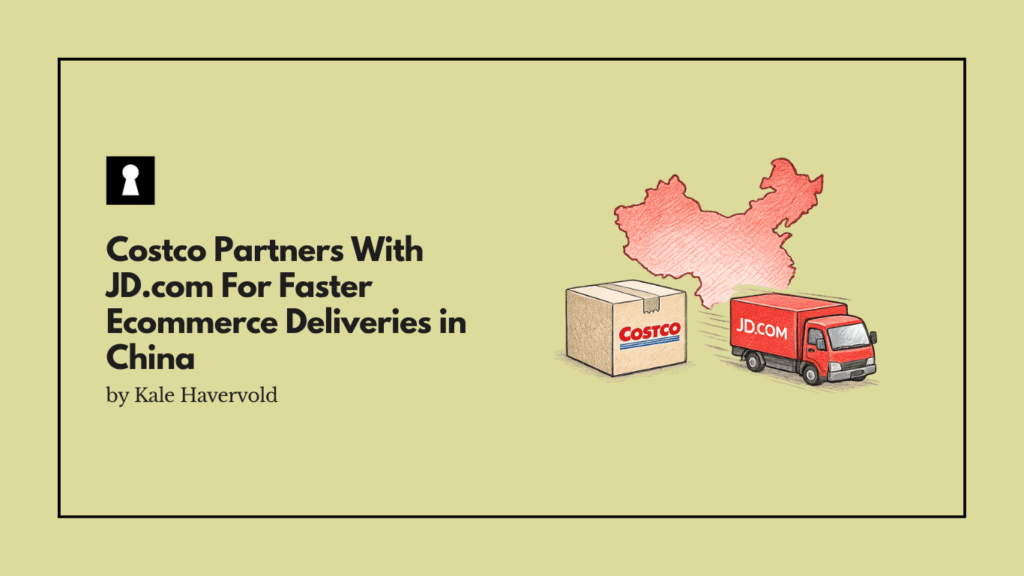
In an effort to scale more effectively in China and offer fast delivery nationwide, Costco has partnered with JD.com. The move gives Costco access to JD.com’s logistics and supply chain, and helps drive a ton of new customers to JD.com’s platform.
The partnership is also geared towards new buyers, as it lets people buy Costco products even if they don’t have a membership. This is one of the features of the agreement that makes it a good blueprint for other ecommerce companies to follow when it comes to expanding internationally.
JD.com Becomes Costco’s Official Ecommerce Platform Partner in China
Costco and JD.com have come together to announce a new strategic partnership. The partnership sees JD.com become Costco’s sole and official ecommerce platform partner in China.
The official Costco flagship store on JD.com launched in a trial operation back in May, and currently features around 700 products across many retail categories like food, personal care, beauty, supplements, and many others.
In the store’s first month, it drew over 30 million visits and secured almost 200,000 store followers, highlighting the massive amount of interest that Chinese consumers have in Costco’s products.
In an effort to reduce purchase barriers for customers and make Costco more accessible in China, the store offers flexible and rapid fulfillment and also lets people shop without a membership (albeit at a slightly higher price point).
This move comes just after the announcement that JD.com will also be one of the few places that will be able to sell Nike products online in China, beginning in 2027, showing that the company is looking to attract more people to its platform by partnering with established and popular brands.
The Move Provides Several Benefits for Both Costco and JD.com
This partnership is mutually beneficial, with both companies hoping to see major benefits as a result of the deal.
For Costco, it gets to scale its business in China outside of physical warehouse cities, and evade problems like slow store growth and geographic isolation by only operating in regions where they have a physical presence.
The move also lets them leverage JD.com’s existing logistics network to both cast a wider net and reach more customers, and instantly offer nationwide fast deliveries.
On the other hand, JD.com gets a massive influx of shoppers visiting its platform who want to buy Costco products, and also gets to sell exclusive and high-demand products that customers in China won’t be able to find anywhere else.
JD.com also likely hopes the move can help them turn around a first-quarter profit decline and get back on track.
Both brands haven’t been shy about expressing their excitement for the collaboration. Costco China said that “Leveraging JD.com’s established online platform and extensive logistics network enables us to break regional limitations, extend our reach into broader markets, and efficiently deliver Costco’s signature merchandise and service value to consumers nationwide.”
A spokesperson for JD Super, the online supermarket business for JD.com, said that “By leveraging our omni-channel marketing resources and nationwide supply chain, we look forward to helping inject new vitality into Costco’s growth in China.”
Our Take
The Blueprint For Scaling Internationally
While the deal is localized to China and won’t directly impact sellers in other parts of the world doesn’t mean it’s not important to know about. In fact, quite the opposite. The move by Costco shows the blueprint for how to successfully scale internationally for ecommerce brands.
First, brands looking to scale in a new area should focus on deep logistical integration and make an effort to partner with a company that has local expertise to navigate the ins and outs of the area to help achieve immediate coverage throughout the new region. It’s often much easier and less intensive to use existing logistical networks rather than build and develop your own.
Also, when entering a large new foreign market, it may be a good idea to lower or loosen entry barriers for new customers, whether that’s not requiring a membership or offering affordable and/or flexible fulfillment options.