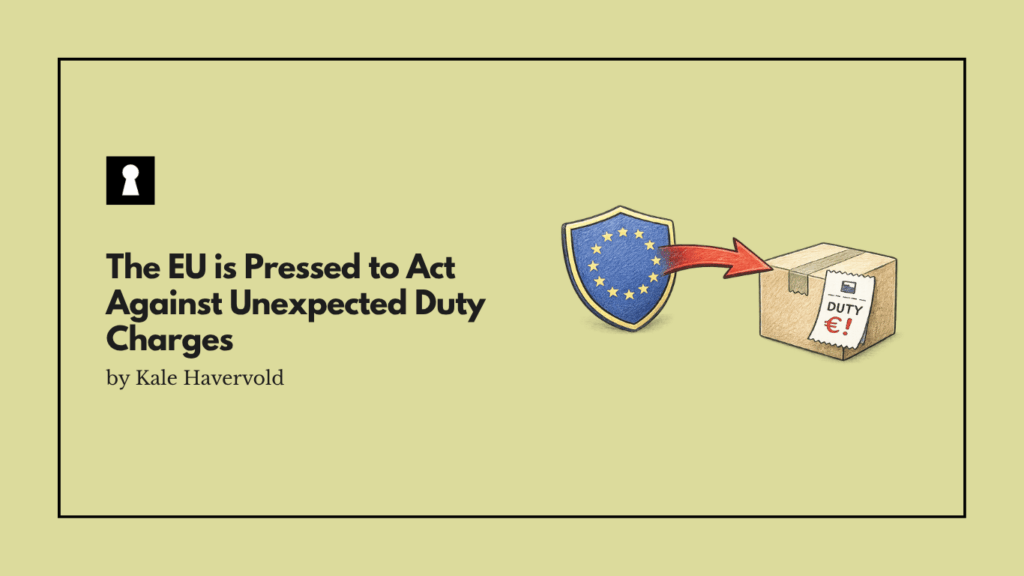
Around a month after the EU’s new customs duty came into effect, the European Commission is being pressured to ensure that online shoppers aren’t hit with unexpected or hidden charges to cover these duties for businesses.
These duties are the legal responsibility of businesses and platforms, and end customers shouldn’t receive these charges as a condition for delivery. As a result of the pressure, the European Commission is actively monitoring the situation.
European Commission Pressed to Make Sure Customers Don’t Face Unexpected Duty Charges
Shortly after the EU decided to scrap the customs duty exemption, the European Commission is being pressured to make sure that consumers aren’t facing hidden or unexpected charges on their online orders to cover the newly imposed customs duty, which is a €3 fee on low-value ecommerce imports.
Specifically, Europe’s consumer federation and a leading EU lawmaker are applying the pressure. First, BEUC, which is the umbrella group for consumer organizations from over 30 European countries, said that consumers must know the total price of an item, including any duties.
It found that sometimes duties are only shown later in the checkout process, or not at all, which leads to potential charges that customers don’t expect. Also, some postal providers said that the end-recipient of a parcel may receive payment requests before an item gets delivered.
Dirk Gotink, a Dutch lawmaker who oversaw the customs file, wrote to the EU Trade Commissioner, Maros Sefcovic, to complain about this and say that it should be up to platforms and businesses to handle these duties and charges and that customers shouldn’t be hit with these charges as a condition for these items being delivered.
Businesses are Legally Responsible For Customs Duties
The good news is that the European Commission agrees with this, as a spokesperson said that businesses are legally responsible for these customs duties, and that they shouldn’t be collected from customers. To ensure these rules are being followed, the Commission is monitoring the situation.
But while it’s a company’s job to handle these duties, the way some of the most popular platforms do it varies from one to the next. For example, both Temu and AliExpress include customs duties at checkout, but AliExpress calls it an estimate.
Shein doesn’t include duties at checkout, but says it pays all duties itself, and prices factor it in. However, some Shein deliveries come from EU warehouses, which aren’t subject to these duties.
These Duties Were Brought In to Curb Ecommerce Imports
The reason these duties were imposed in the first place was to curb the rising ecommerce imports in the EU. Cheap ecommerce parcels, often from China, have been flooding the EU market, making it very hard for domestic sellers to compete with the pricing.
Many of these imports also failed to meet EU safety standards and were potentially harmful. As a result, in addition to making competition fairer for everyone, the move was likely made to help keep EU shoppers and their families safer.
While the new customs duty is still very new, it’s already had an impact, as many major platforms that were responsible for shipping these cheap ecommerce imports, such as Temu and Shein, have pulled back hard on European ads. Similarly, freight capacity from China to Europe has also fallen since the duties have been imposed.
Our Take
Keeping Things Clear, Honest, and Straightforward for Customers
Whether it’s not revealing duty charges until the end of the checkout process, or charging hidden fees, customers don’t like being surprised when checking out. Companies and platforms alike need to make an effort to be upfront and honest regarding all fees and charges from the start.
While hiding fees and costs may help your prices look more attractive and encourage people to buy, when they hit your checkout and see what they’re actually paying, not being honest from the start will actually hurt you more than help.
Transparency from the start of a customer’s journey until the end will help boost customer trust, keep your cart abandonment rates in check, and potentially protect you from legal trouble.