
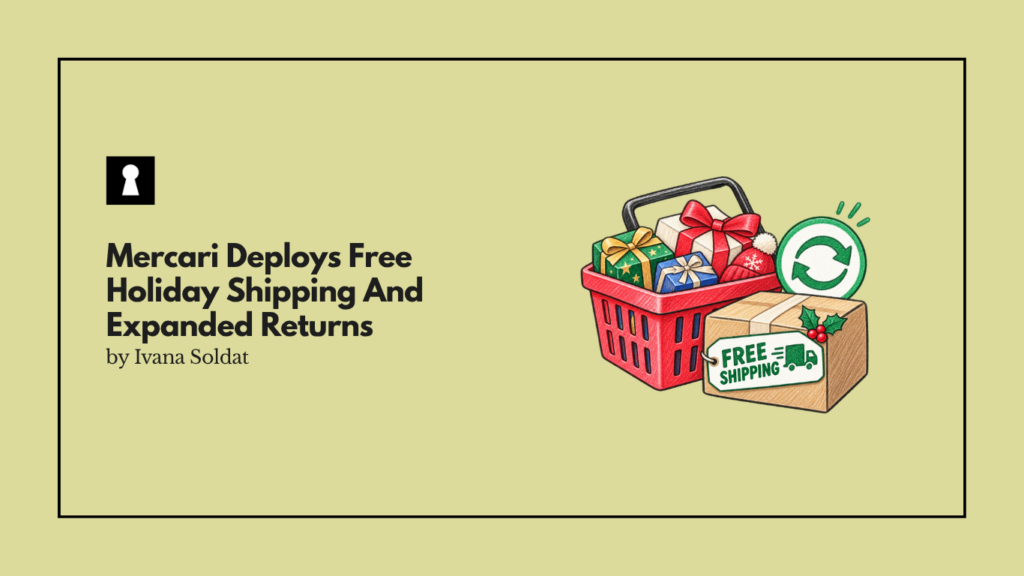
Mercari announced that from October 22 through January 4, 2027, it will offer free shipping on qualifying orders of $50 or more. For single-item purchases, buyers must use Mercari’s Best Rate prepaid shipping option, while bundled purchases qualify regardless of the shipping rate or carrier, provided the total weight does not exceed 5 pounds.
This strategic threshold is a direct response to management’s stated priority of increasing average purchase amounts. By incentivizing bundles and higher-ticket items, Mercari aims to spread fixed shipping costs across multiple lower-priced purchases, effectively engineering a higher gross merchandise volume (GMV) per transaction without permanently altering its baseline fee structure.
Fashion Exchange Returns Act As A Controlled GMV Lever
Alongside the shipping promotion, Mercari is bringing back its Fashion Exchange program for the holidays. This initiative allows buyers to return select clothing, shoes, and bags for Mercari credit if items do not fit, have an unpleasant smell, or otherwise fail to meet expectations. Crucially, sellers still receive their full payment and an automatic rating, while Mercari handles the exchange process and associated costs.
This is not a traditional, frictionless return policy. Under previous iterations of the program, buyers had only 72 hours after delivery to request an exchange, and refunds were issued exclusively as Mercari credits expiring in 30 days, rather than cash back to the original payment method. By restricting the refund mechanism to platform credit, Mercari ensures that the “lost” sale is immediately recaptured within its own ecosystem, turning a potential GMV deduction into a forced retention loop.
Shipping Protection Plus Plus Shifts Risk And Monetizes Anxiety
Mercari also announced it will soon introduce Shipping Protection Plus+, an optional program offering additional coverage against loss or damage in transit for higher-value merchandise.
Currently, eligible shipments using Mercari prepaid labels are covered for up to $200 on standard services, or just $20 for First Class Envelopes.
While details on pricing and maximum coverage for the new tier are pending, the introduction of paid, à la carte insurance represents a new revenue stream for the platform. It also subtly shifts the psychological burden of shipping risk onto the seller, encouraging them to pay a premium to protect high-value items rather than relying on the platform’s baseline, and often disputed, claims process.
The Timing Coincides With Broader Carrier Rate Hikes
The rollout of these promotions is highly calculated. Mercari announced these holiday perks on October 17, just two days before previously scheduled shipping rate increases took effect across USPS, UPS, and FedEx.
By introducing a free shipping subsidy immediately following a base rate hike, Mercari softens the blow for buyers and prevents a sudden drop in conversion rates. The company reported 15 percent year-over-year GMV growth in fiscal Q4 2026, with Monthly Active Users increasing to 4.2 million.
Management is targeting at least 10 percent US GMV growth in fiscal 2027, making this temporary subsidy a necessary bridge to maintain momentum through the year-end transition.
Our Take
Subsidized Friction is a Temporary Growth Hack
Mercari’s holiday strategy is a masterclass in targeted behavioral economics. The $50 free shipping threshold cleverly manipulates buyers into bundling items they might not have otherwise purchased, artificially inflating the average order value.
Meanwhile, the Fashion Exchange program offers the illusion of buyer protection while strictly ring-fencing the financial risk to the platform itself via expiring store credit. These promotions may drive a short-term spike in holiday volume, but they must remain vigilant. Bundling increases complexity, and the push toward higher-value items makes the upcoming Shipping Protection Plus+ an almost mandatory, margin-eroding expense.
Mercari is successfully engineering a busier holiday season, but the long-term cost of these temporary incentives will eventually be socialized across the entire seller base.