
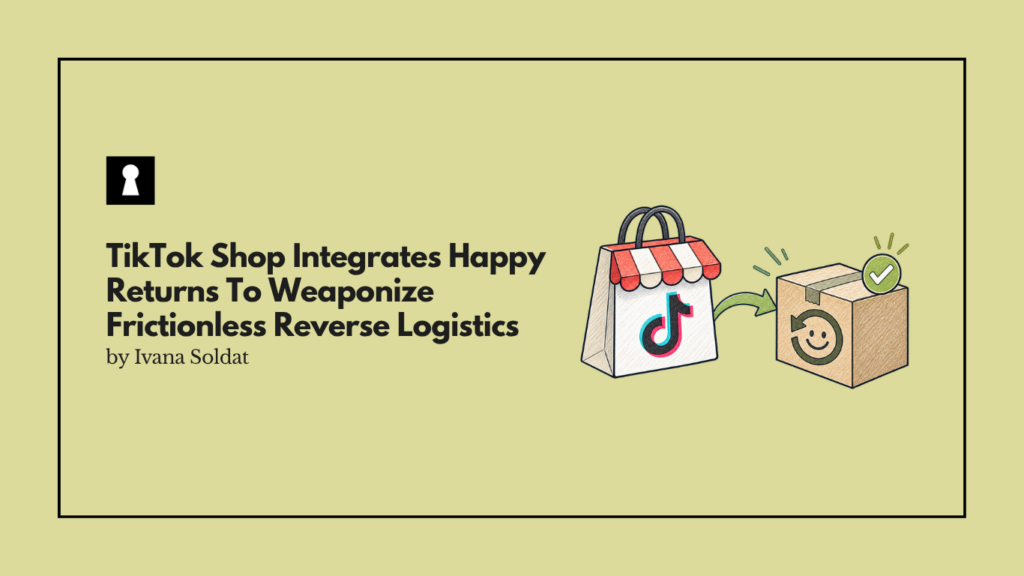
Customer returns represent billions of dollars in lost revenue and operational drag annually. To combat this, TikTok Shop is partnering with UPS’s Happy Returns to make the return process faster, hassle-free, and more trustworthy, according to Patrick Nommensen, TikTok Shop’s president of strategic initiatives.
By embedding Happy Returns directly into the platform, TikTok Shop is attempting to neutralize the primary hesitation consumers have when buying apparel or accessories via short-form video: the fear of a complicated return process.
This is the first time Happy Returns has been directly integrated at the platform level, rather than requiring individual retailers to build the integration on their own standalone websites.
The 10,000 Location Moat And The Apparel Focus
The core value proposition of Happy Returns is its network of 10,000 nationwide drop-off locations, branded as Return Bars, situated within high-footprint retailers like The UPS Store, Ulta Beauty, and Staples.
Consumers initiate the return within the TikTok Shop app and simply hand the unpackaged item to a Return Bar associate. However, this infrastructure is not universally optimal for all sellers. Birdie Smith, Happy Returns’ head of sales, noted that the service is best suited for merchants processing around 10,000 or more returns a year, with a primary focus on apparel, footwear, and accessories.
Early adopters leveraging this integration include Everlane, Windsor, and Pacsun, brands that already operate with high return volumes and understand the economics of streamlined reverse logistics.
Platform-Level Integration Versus Merchant-Led Setup
The mechanics of the integration differ based on a seller’s fulfillment method. For orders fulfilled directly by TikTok Shop, no additional setup is required, and existing Happy Returns users can simply activate the service within the seller center. However, for seller-fulfilled orders, Happy Returns must guide the retailer through a dedicated setup process.
This bifurcation highlights TikTok Shop’s broader strategy to push merchants toward its in-house fulfillment services, where the platform can control and standardize the entire customer experience, including the post-purchase return journey.
The Competitive Response To FedEx Easy Returns
This move is also a direct competitive counter to FedEx, which launched its own competing service, Easy Returns, last year. As legacy carriers recognize that last-mile delivery margins are compressing, they are aggressively pivoting to capture the highly profitable reverse logistics market.
By securing an exclusive, platform-level integration with TikTok Shop, UPS is effectively locking out FedEx from one of the fastest-growing commerce ecosystems in the United States.
David Sobie, co-founder and CEO of Happy Returns, framed the partnership as providing the fraud-resistant, scalable returns infrastructure that merchants need to grow confidently.
Our Take
Know Your Break-Even Return Rate Before Going Box-Free
For ecommerce founders, the integration of Happy Returns into TikTok Shop is a double-edged sword. On one hand, offering a frictionless, box-free return experience is a mandatory conversion lever for impulse-driven categories like fashion. A seamless return policy directly correlates with higher initial purchase confidence.
On the other hand, merchants must rigorously audit the true cost of this convenience. If your return rate is already high, outsourcing to a premium reverse logistics network may protect your brand reputation, but it will also accelerate cash burn.
Before activating this feature, calculate your break-even return rate. If your product margins cannot absorb the cost of a frictionless return, you are merely subsidizing a bad product-market fit.