
Amazon wasn’t content just owning your shopping cart. Now it wants your freight too.
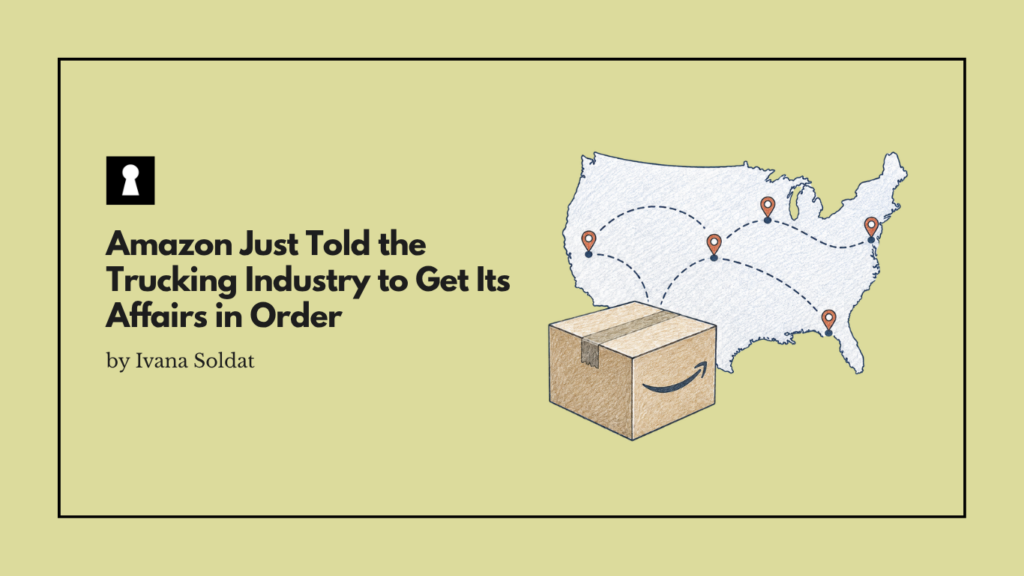
The company just announced it’s opening Amazon Freight, its logistics arm, to any U.S. business that wants to use it, not just sellers moving stuff into Amazon’s own warehouses. We’re talking full less-than-truckload shipping to any destination in the country, fully untethered from the Amazon ecosystem. You don’t need to sell on Amazon.
The service falls under something Amazon is calling “Amazon Supply Chain Services,” which is a very corporate way of saying: we want a piece of every single step between factory and front door.
The Part That Made Wall Street Nervous
For years, the conventional wisdom was that the LTL freight market was untouchable. It runs on hub-and-spoke networks that take decades and billions to build, and terminal infrastructure that isn’t exactly something you spin up in a weekend. Analysts were comfortable telling clients that Amazon couldn’t crack it.
Then Amazon cracked it.
FedEx Freight, which only just spun off from FedEx proper, dropped nearly 7% on the news. Old Dominion, arguably the most respected name in the LTL space, fell over 5%. XPO and ArcBest both lost around 5% too. That’s a lot of market cap evaporating on a single announcement from a company that, technically, hasn’t moved a single one of their pallets yet.
That’s how seriously the market is taking this.
Why Should You Care?
This is a supply chain story, and supply chain is the part of ecommerce that quietly determines who wins and who bleeds margin.
Amazon has spent years building logistics infrastructure that was technically subsidized by its retail operation. Every warehouse, every delivery van, every routing algorithm, funded in part by the fact that Amazon also happens to sell you paper towels. Now it’s flipping that infrastructure into a standalone revenue line, pointed directly at the businesses that have been paying FedEx and Old Dominion for decades.
For small and mid-size ecommerce operators, this could mean real pricing pressure on freight, which would be genuinely welcome, or it could mean another critical function of their business running through Amazon’s pipes, which is a different kind of risk entirely.
Our Take
Amazon Is Collecting Tolls on the Entire Internet Economy
Let’s be clear about what’s happening here. Amazon started as a bookstore. It became a marketplace. Then it became a cloud provider. Then a fulfillment network. Then an advertising platform. Now it’s a freight carrier.
Every time a business tries to compete with Amazon or simply sell things online, it runs into Amazon somewhere in the stack. You might not sell on Amazon, but you might be running on AWS, shipping through Amazon Freight, and advertising via Amazon DSP to reach customers who are comparing your price to the same product on Amazon’s marketplace.
The LTL expansion is not a logistics play. It’s a dependency play. The more of your supply chain runs through Amazon, the more data Amazon has, the more leverage Amazon has, and the harder it gets to leave.
The legacy carriers deserve some sympathy here, their stock prices took a hit for building exactly the kind of slow, capital-intensive moats that are supposed to protect you from disruption. Those moats did not protect them.
Whether Amazon can actually execute at scale in LTL, a business with genuinely complex operational demands, remains to be seen. But the market is clearly not betting against them.