Every retail media network story this month has followed the same template: retailer has first-party data, retailer builds advertising product around that data, brands pay to reach shoppers already in the buying mindset. Home Depot, The Iconic in Australia, Kroger, Target, Walmart. The data is the asset. The advertising product is the monetisation. The ecommerce platform is where most of the transactions happen.
Circle K breaks that template in a way that is worth paying attention to.
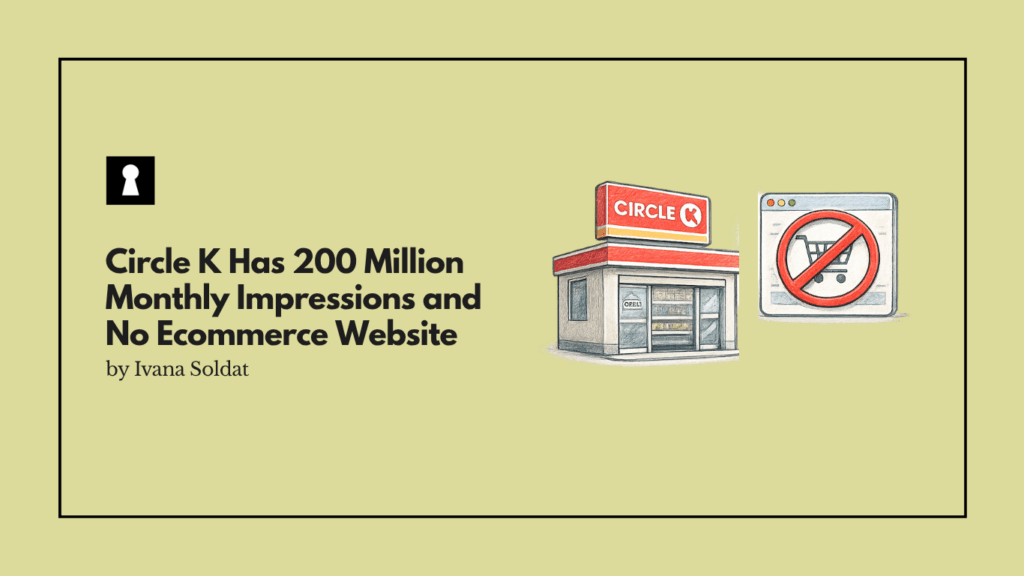
Circle K does not have an ecommerce website. The company sells fuel and convenience goods in physical locations. Its transactions happen at the pump, at the register, and nowhere else. Which means its retail media network, Full Circle Media, is built entirely around physical-world attention: in-store screens, pump-side screens, app placements, email, and now social and off-site media. The first-party data it is selling advertisers access to comes from loyalty members who visit stores, not from tracked browsing sessions.
That is a different kind of retail media business than the ones EcomWatch has been covering, and it raises a different set of questions.
What Full Circle Media Actually Is
Circle K named Joell Robinson director of retail media last year, previously senior director of retail media at Giant Eagle where she helped build the Leap retail media network. The company began using the Full Circle Media branding in February, having been relatively quiet about its retail media business before then.
Full Circle Media reaches more than 6,600 locations in the US and delivers up to 200 million monthly impressions. The company has 13,200 screens installed at 6,600 locations, in addition to in-store digital walls. Robinson describes the in-store Lift screens as working similarly to sponsored search: when a customer buys one candy bar, the screen might surface a “two for $3” deal.
In May, the media network started offering social and off-site placements, extending reach beyond Circle K’s own physical and digital properties. The addition of off-site placements begins to make Full Circle Media more comparable to a standard retail media network: brands can now reach Circle K shoppers when they are not at Circle K, using Circle K’s audience data to target them on other platforms.
The Fuel Pump Problem and Why It Matters
The most interesting strategic challenge Robinson describes is converting fuel pump traffic into in-store revenue. “We have so much traffic at the pump, and I think even if we could get a small percentage of that, it would be material,” she said. “That gives them just the opportunity to engage with us and engage with our customer service folks, which I think is where we win them.”
Full Circle Media includes screens at more than 3,800 fuel pumps. Robinson said her team has been trying to bring more measurement to the fuel pump, and has been testing ways to bring those customers into the store via the screen or through SMS or push notifications on their phones.
This is the conversion problem that convenience retail has always had. A customer stops for fuel, spends three minutes at the pump, and drives away. The pump screen is real estate with a captive audience and almost no conversion path into the store. If Circle K can measure whether a pump-screen ad followed by an SMS prompt drove a store visit, it can sell that as a trackable media product.
Brands selling beverages, snacks, or auto products that Circle K carries would pay for a verified in-store visit in a way they would not pay for a simple pump screen impression. That is the closed-loop measurement Robinson is working toward.
The Loyalty Foundation and the 14.7 Million Members
Circle K’s loyalty program, Inner Circle, has grown to more than 5,000 stores in 34 states and has 14.7 million members. The program was just redesigned to reward customers based on how often they visit the store or the pump.
“Especially in retail media, having a strong loyalty program is really the foundation of what we’re trying to do,” Robinson said. “Who we know, we can engage with.”
Retail media networks built on loyalty data are structurally more valuable than ones built on anonymous in-store traffic, because the loyalty member is a known entity: purchase history, visit frequency, category preferences, geographic patterns. A brand buying audience segments from Full Circle Media built on Inner Circle data is getting something that an anonymous pump screen impression cannot provide.
The Fragmentation Problem That Is Not Going Away
Retail media analyst Andrew Lipsman said C-store retail media networks are often an afterthought in the US retail media conversation because the market is fragmented between too many different chains.
“In the quest for CPG brand dollars, they take a back seat to Amazon, Walmart, Kroger, Instacart and nearly a dozen others.” He said outside of 7-Eleven’s Gulp Media Network, “for other C-store RMNs to achieve viability, the market will ultimately need to consolidate into an aggregated media network.”
This is the honest framing of where Circle K’s retail media business sits. 200 million monthly impressions is a real number. But a CPG brand planning its retail media budget allocation is not going to prioritize Full Circle Media over Amazon, Walmart Connect, or Kroger Precision Marketing, because the audience scale and measurement maturity at those networks is currently higher. Circle K is building the right infrastructure at a moment when the retail media market has many more options than it has budget to fill them all.
Our Take
A Gas Station Just Became One of the More Interesting Retail Media Plays in America
Circle K’s Full Circle Media is worth watching for a reason that is not obvious from the headline numbers. The retail media conversation in 2026 is dominated by grocery and ecommerce networks because those categories have the most developed ecommerce infrastructure, the most mature loyalty programs, and the most direct path from advertising to verifiable purchase.
Circle K has none of that. What it has instead is physical-world attention at enormous scale, a fuel pump conversion problem that creates a genuine measurement innovation incentive, and a loyalty program that is getting more sophisticated.
If the pump-to-store conversion challenge gets solved and the loyalty data gets structured into usable audience segments at scale, Full Circle Media becomes a meaningfully different media product from anything a grocery or ecommerce retailer can offer: high-frequency, in-moment, location-specific, and built around a customer relationship that is as habitual as anything in retail.