
Japan was supposed to be a hard market for TikTok. Culturally conservative, privacy-conscious, dominated by deeply entrenched domestic platforms like LINE, Rakuten, and Yahoo! Shopping. A country where global tech platforms routinely arrive with confidence and leave with humility. Instagram took years to gain traction. Amazon did well but never displaced Rakuten the way it displaced domestic incumbents elsewhere.
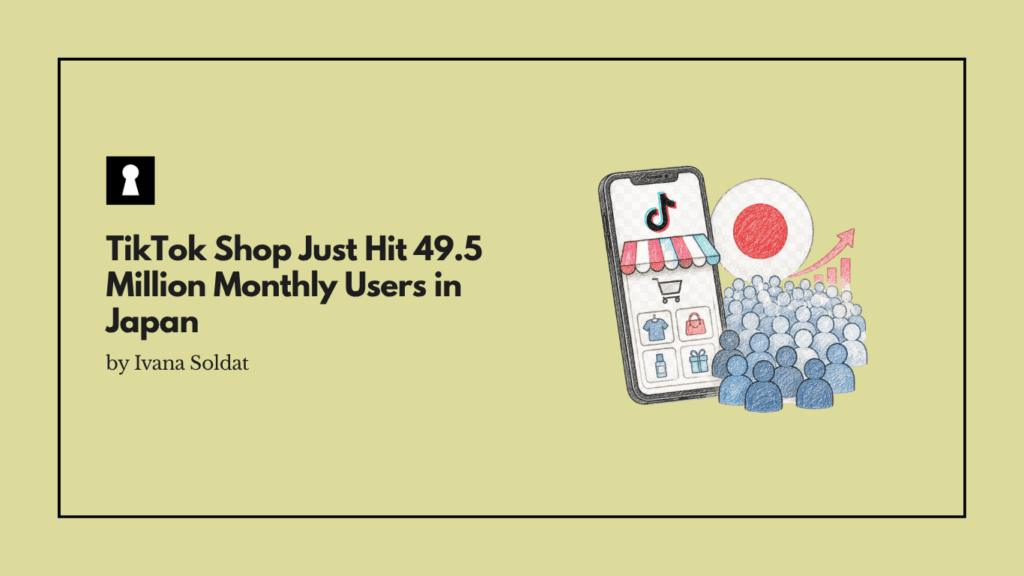
TikTok’s trajectory is defying the skeptics. Monthly active users in Japan have climbed to 49.5 million, up from 42 million in late 2025, in a country of around 107 million internet users. That is a platform reaching roughly 46% of the country’s connected population. This is not a niche youth platform anymore. It is a mass-market media channel, and as of June 30, 2025, it is also a shopping destination.
What TikTok Shop Japan Has Looked Like in Its First Year
TikTok Shop launched in Japan on June 30, 2025, positioning itself explicitly as “discovery commerce,” the model where people buy products because they encountered them in content rather than because they searched for them. In the first six months of operation, the platform reported that approximately 70% of its Japanese GMV came from content-led purchases, meaning videos and live streams, rather than search-driven traffic.
That is not the model Amazon runs on. It is not how Rakuten works. It is closer to how impulse purchasing functions in a physical store where something catches your eye, except the shelves are endless and the recommendations are algorithmically personalized.
The scale signals are significant. Total GMV crossed ¥15 billion in the platform’s first six months of operation. Independent market research firm studio15 is projecting the Japanese market could reach ¥128.3 billion (roughly $900 million) in annual GMV by the end of 2026. If that projection holds, TikTok Shop Japan would represent one of the fastest commerce ramp-ups in the country’s recent ecommerce history.
One detail that brands targeting Japan should pay close attention to: the buyer base is not skewing young. The 18 to 34 and 35 and older cohorts were each roughly half of purchasers in the first six months. This is not teenagers buying impulse goods. This is a broad adult consumer base using a content-driven discovery model to make purchasing decisions, which changes the product and content strategy significantly.
Why Japan Is Not Just Another TikTok Shop Market
Every market where TikTok Shop has launched has its own complications. Japan’s are distinct enough to warrant separate attention.
Japanese consumers have among the highest product quality and customer service expectations of any ecommerce market in the world. Return rates for quality complaints are low not because Japanese shoppers are satisfied with mediocre products, but because they research purchases carefully and expect exactly what was represented.
A product that performs slightly differently than demonstrated in a TikTok video is not a minor inconvenience in Japan. It is a trust violation, and Japanese consumers communicate that through reviews and social networks in ways that compound fast.
Packaging matters more in Japan than in almost any other market. The unboxing experience is taken seriously, damaged or careless packaging is a genuine complaint driver, and the expectation of precision extends from the product itself to how it arrives. Customer service must be in Japanese. Not translated Japanese, actual fluent, culturally appropriate Japanese from a team that understands the norms around politeness, directness, and resolution.
The legal layer adds further complexity. Japan’s Act on Specified Commercial Transactions requires specific disclosures from ecommerce sellers that differ meaningfully from requirements in other markets. Compliance is not optional, and unlike some markets where enforcement is inconsistent, Japanese regulators and consumers both tend to take these requirements seriously.
The Content Problem That Is Not About Content
TikTok Shop’s model is content-led. The purchase happens because of the video. Which means the quality of the content is inseparable from the quality of the commerce. In Japan, that creates a localization requirement that goes well beyond translating a product title.
Japanese TikTok content has its own aesthetic norms, pacing, humor register, and authenticity expectations. A video that performs well in the US or Southeast Asia will not necessarily translate. The creators who drive purchases in Japan are not interchangeable with creators elsewhere, and creator partnerships require genuine cultural alignment rather than simply finding someone with a large following who will post a product demo.
Brands that have succeeded in early TikTok Shop Japan were generally those that invested in local creator relationships, produced Japan-specific content rather than dubbed or subtitled international material, and approached the platform as a distinct channel with its own logic rather than a copy-paste of their strategy from other markets.
Our Take
49.5 Million Users Is Not a Japan Strategy
TikTok’s Japan numbers are impressive and the commerce trajectory is real. A platform reaching 46% of Japan’s internet population a year into its shopping push, generating ¥15 billion in its first six months, and projecting nearly ¥130 billion by year end deserves serious attention from any brand with ambitions in the Japanese market.
What the headline user figure does not tell you is whether your brand, your product, your packaging, your customer service model, and your content strategy are remotely ready for what Japanese consumers will expect from you.
Japan has a long track record of welcoming foreign platforms and then quietly punishing the ones that treated it like every other market. TikTok Shop’s growth numbers suggest the audience is ready. The question is whether the brands arriving to meet it are.