
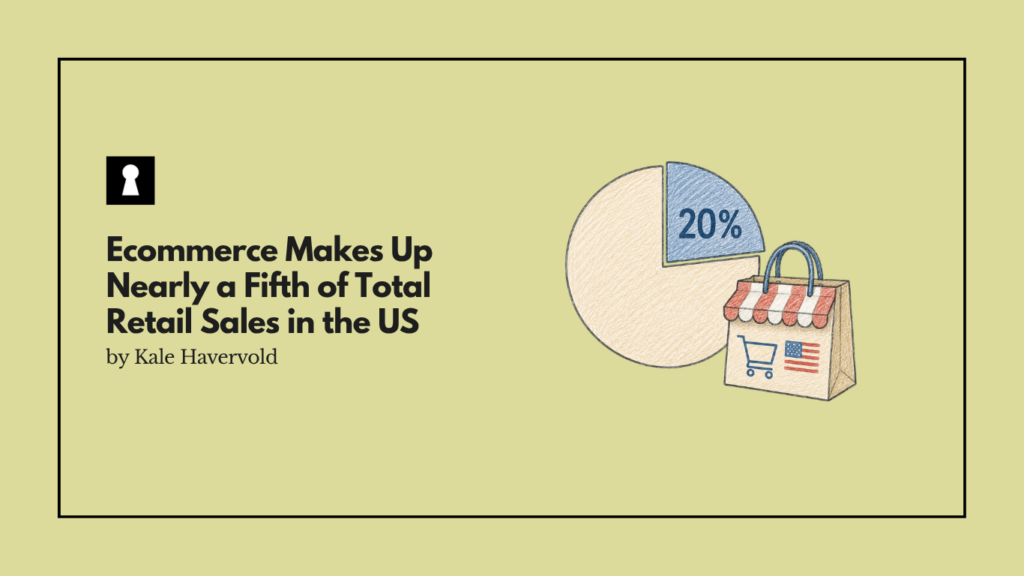
While ecommerce isn’t a new concept, it’s grown leaps and bounds over the past few years. In fact, as of Q2 2026, ecommerce makes up over 17% of total retail sales in the USA, well over double where it was only a decade ago.
This sustained growth over the years has been driven by things like convenience, faster shipping, and innovations like in-app selling and live shopping. All of this growth, with no signs of slowing down, shows that online shopping is here to stay and will continue to be a major force in the retail industry.
Ecommerce Continues To Take a Higher Percentage of Total US Retail Sales
Ecommerce sales are continuing to grow rapidly, and officially made up 17.1% of estimated total US retail sales in Q2 2026, according to the United States Census Bureau. This is a noticeable jump from the 16.3% back in Q2 2025.
Total retail sales in the USA during Q2 2026 were $1.986.5 trillion, with $340.2 billion of that being ecommerce sales, adjusted for seasonal variation, but not for price changes. These Q2 2026 numbers for ecommerce are 3.8% higher than Q1 2026.
As a result, it’s clear that online shopping has gone from a niche choice for certain shoppers to the default option for many customers. In fact, the average American household gets around 150 packages each year, and a huge percentage of Americans shop online on a weekly basis.
The Growth of Ecommerce Over The Years Has Been Staggering
While ecommerce making up 17.1% of total estimated US retail sales in Q2 2026 is a new all-time high, this growth didn’t happen overnight. Ecommerce has been on an upward trend since the early 2000s, often growing by around 1% each year.
However, what really sent ecommerce to new heights was the pandemic, as it forced many people to stay in their homes and adjust their shopping habits towards ecommerce. In fact, in Q4 2019, ecommerce sales made up 11.2% of total retail sales in the US, but this ballooned up to 16.3% in Q2 2020.
While it fell in late 2020 to early 2022, with the lowest point being 14.2% in Q2 2022, ecommerce sales have bounced back since then and show no signs of slowing down. We may not see single-year growth as large as in 2019 to 2020 ever again, but it wouldn’t be surprising at all to see ecommerce continue to make up a larger portion of retail sales going forward.
Also, while ecommerce’s climb has been strong, there’s still plenty of future growth in the space for sellers to take advantage of, especially if ecommerce can eventually reach a quarter (or more) of total US retail sales.
The Drivers of Behind This Increase
So what’s driving this sustained growth in the space? First, the convenience and 24/7 access of ecommerce is a major advantage over traditional physical retail. Instead of having to shop during rigid hours that may not work with your schedule, you’re able to shop millions of items from a variety of stores in minutes, from the comfort of home.
Next, the massive improvements in shipping speed have also helped. In the past, you often had to wait quite a while for packages to arrive, but now it’s generally a few days at most. In fact, 69% of brands aim to deliver domestic orders within two to three days, with many others delivering orders even quicker than that.
Innovations like live commerce and shopping inside of apps like Instagram and TikTok have also helped fuel the interest in ecommerce. Live commerce in particular is growing very quickly, as eBay Live, one of the leaders in the space, saw its gross merchandise volume (GMV) climb about eight times year-over-year in Q2 2026.
Many ecommerce platforms and stores today also combine shopping with things like entertainment, social media, and community to bring in more customers. Of course, other things like more secure digital payment options, better trust, improved security, and lower product prices have also helped ecommerce succeed and grow its market share.
Our Take
Online Shopping is Here to Stay
All of this data and information points to online shopping being here to stay, and likely becoming a permanent fixture in the retail space going forward. While many thought ecommerce adoption would continue to fall after the pandemic as people return to shopping in stores, the opposite has happened.
As a result, for retailers that have been dragging their feet about selling online, now’s the time to start. For companies that already sell online, it’s more important than ever for them to improve their operations to compete with the legacy brands increasing their focus on ecommerce.
When competition heats up, either from legacy brands or other experienced ecommerce sellers, brands need to be on top of their game to attract customers. In addition to more competition, a bigger microscope on ecommerce within the general retail space may mean more expensive ads, more price wars, and more shipping pressure.