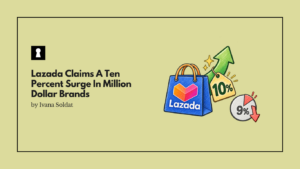

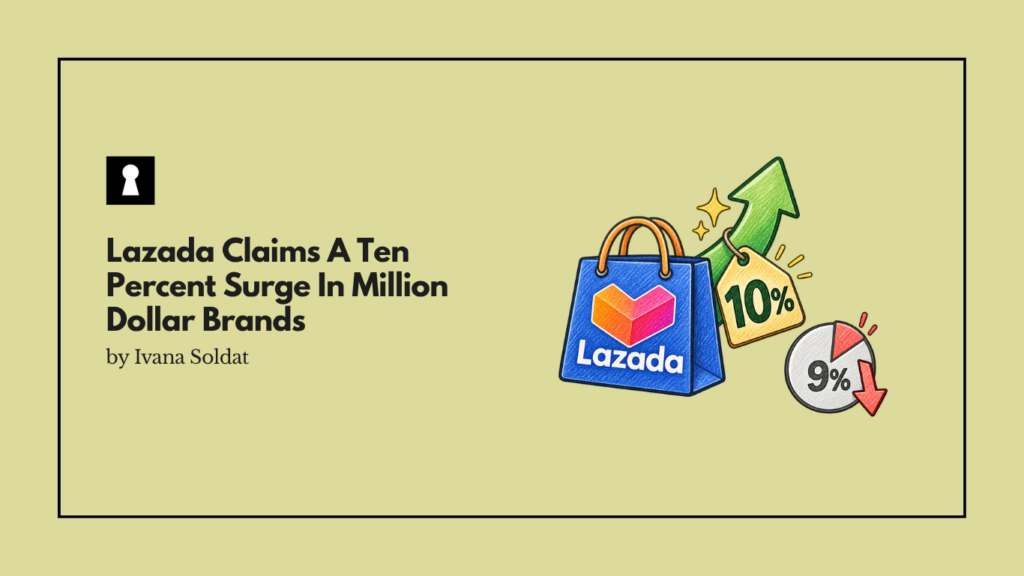
Lazada recently announced that its 9.9 Mega Brands Sale drove a ten percent increase in brands generating at least one million dollars in gross merchandise volume compared to its mid-year event.
The platform also highlighted that orders over one hundred dollars accounted for nearly sixty percent of total campaign volume, alongside a sevenfold increase in LazMall sales during the peak period.
While these figures paint a picture of robust brand growth, they obscure a much harsher reality regarding the platform overall trajectory in Southeast Asia.
The Million Dollar Club Masks A Broader Contraction In Gross Merchandise Volume
Lazada celebrates the growth of its top tier sellers, but this metric is a narrow slice of a shrinking pie. Independent market trackers report that Lazada share of combined Southeast Asian ecommerce gross merchandise volume fell from 16 percent in 2024 to just 9 percent in 2025.
During this same period, the broader regional market expanded by nearly 23 percent, meaning the platform actual volume contracted by roughly 28 percent year over year. Highlighting the success of a select group of premium brands is a classic defensive maneuver when overall platform momentum is stalling.
Confidence Commerce Is A Euphemism For Surrendering The Volume War
The platform current strategy, internally dubbed Confidence Commerce, represents an explicit pivot away from subsidy-based volume competition. Instead of fighting for market share against dominant rivals, Lazada is retreating into a niche focused on brand authenticity, curation, and logistics reliability.
This explains the heavy emphasis on LazMall, which the company claims generated nearly half of all regional orders during the 9.9 event. By focusing on higher average order values and trusted official stores, Lazada is attempting to extract more revenue per user rather than acquiring new users at a loss.
Artificial Intelligence Features Generate Negligible Volume Relative To Platform Scale
Lazada promoted its artificial intelligence guided shopping tool, LazzieChat, noting it generated 2.2 million dollars in gross merchandise volume during the campaign.
While the company claims this represents a 38 percent uplift, this figure is statistically insignificant for a regional marketplace of this size. A two million dollar contribution is a rounding error in a multi-billion dollar ecosystem.
Promoting this metric suggests the platform is desperate to attach trendy technological buzzwords to its core operations, regardless of their actual commercial impact.
Competitors Are Capturing The Mass Market While Lazada Retrenches
The competitive landscape in Southeast Asia has fundamentally shifted. TikTok Shop now commands roughly 31 percent of the regional market, making it approximately three times larger than Lazada in gross merchandise volume.
Shopee continues to dominate with a 59 percent share, leaving Lazada firmly in third place across most major markets. In Vietnam, Lazada market share has dwindled to a mere 3 percent, while in Indonesia it struggles to maintain a single digit presence in key categories. The 9.9 sale results do not change this structural disadvantage.
Our Take
Focusing on Premium Buyers is a Survival Tactic
Lazada celebration of its Million Dollar Club is a transparent attempt to reframe market share losses as a deliberate strategy of premiumization.
The platform is not winning. It is simply changing the metrics by which it measures success. Brands should view these campaign results with extreme skepticism, recognizing that a platform shrinking its overall footprint offers diminishing network effects and reduced organic discovery.
If your brand relies on Lazada for scalable growth, you are betting on a company that has already conceded the mass market to its competitors.