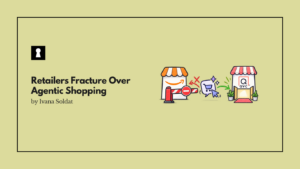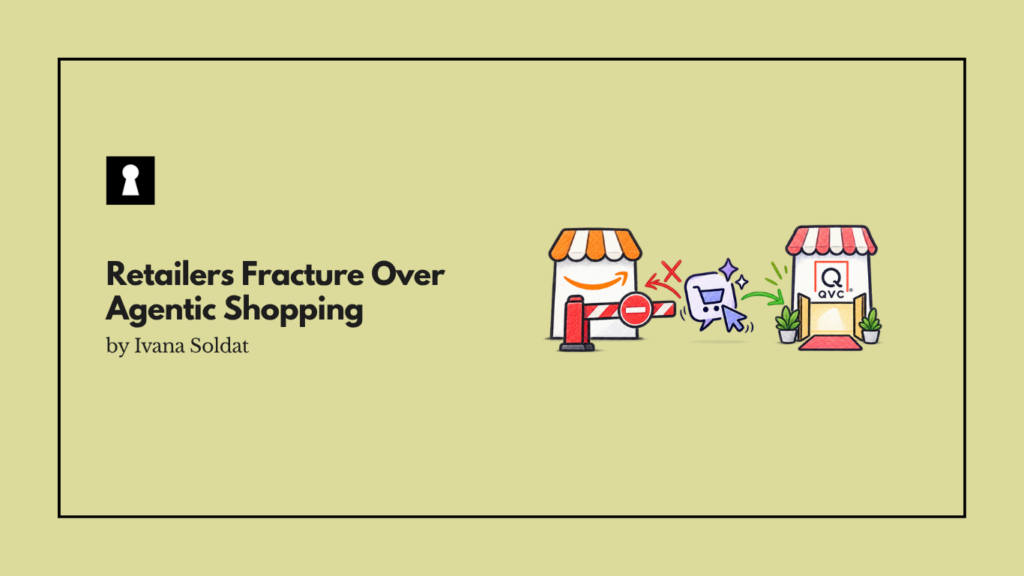
Retailers are currently split into three distinct camps regarding AI shopping agents.
On one end, companies like Gap, Walmart, and Best Buy have publicized partnerships with Meta’s new Muse, actively inviting AI into their ecosystems to facilitate purchases.
On the opposite end, Amazon aims to block shopping agents entirely, most recently shutting out Muse, while Kohl’s similarly prevents agentic purchases. These hesitant retailers cite valid data-control and customer-experience concerns, but their blockade also conveniently serves to protect their own proprietary AI initiatives and walled gardens from external competition.
The Browse But Do Not Buy Compromise
Caught in the middle is Tapestry, the parent company of Kate Spade and Coach. The retailer currently allows AI agents to browse its catalog but prohibits them from completing purchases.
According to Yang Lu, Tapestry’s chief information and digital officer, the company is optimizing its systems for agentic shopping so it is ready if it decides to open that lane. Lu noted that while consumers are comfortable using AI to browse and discover products, they are not yet ready to hand over their credit cards.
This “look but don’t touch” approach allows Tapestry to maintain brand control and gather data on AI behavior without exposing itself to the financial and reputational risks of autonomous transactions.
Consumer Adoption Lags Behind Corporate Hype
Despite the aggressive posturing from tech companies and some retailers, there is currently no evidence that significant numbers of consumers are actually sending out agents to make purchases.
The speed of the technology’s advancement contrasts starkly with actual human shopping behavior. For example, when tested, an AI agent tasked with buying socks every three weeks immediately demanded extensive data access.
Consumers are rightfully questioning why they should grant a third-party AI agent such deep access when established, trusted services like Amazon Subscribe & Save already exist. The friction of granting permissions currently outweighs the perceived convenience of autonomous purchasing.
Legacy Bot Protections Are Accidentally Blocking The Future
For retailers that do want to welcome agentic shopping, a significant technical hurdle remains: legacy infrastructure. QVC noted that its old bot protection systems might inadvertently block legitimate shopping agents.
Research from Billions Network indicates that most of the largest retailers’ ecommerce pages likely block shopping agents by default.
As David Thompson of QVC pointed out, it is becoming increasingly difficult to distinguish between malicious scrapers and legitimate AI shopping assistants. Retailers must now undertake a costly and complex audit of their existing systems to ensure they are not accidentally locking out the very customers they are trying to attract.
Our Take
The Smart Middle Ground
The retail industry’s fractured response to agentic shopping is a classic symptom of technological disruption outpacing strategic clarity. Blocking AI agents might feel like a safe, defensive move today, but it risks making a retailer invisible in the next generation of search and discovery.
Conversely, opening the doors without robust guardrails invites data leakage and brand dilution. The smartest play is the Tapestry model: observe, optimize, and prepare the infrastructure, but do not hand over the checkout keys until consumers actually demand it.
Until then, agentic shopping remains a solution in search of a problem.