
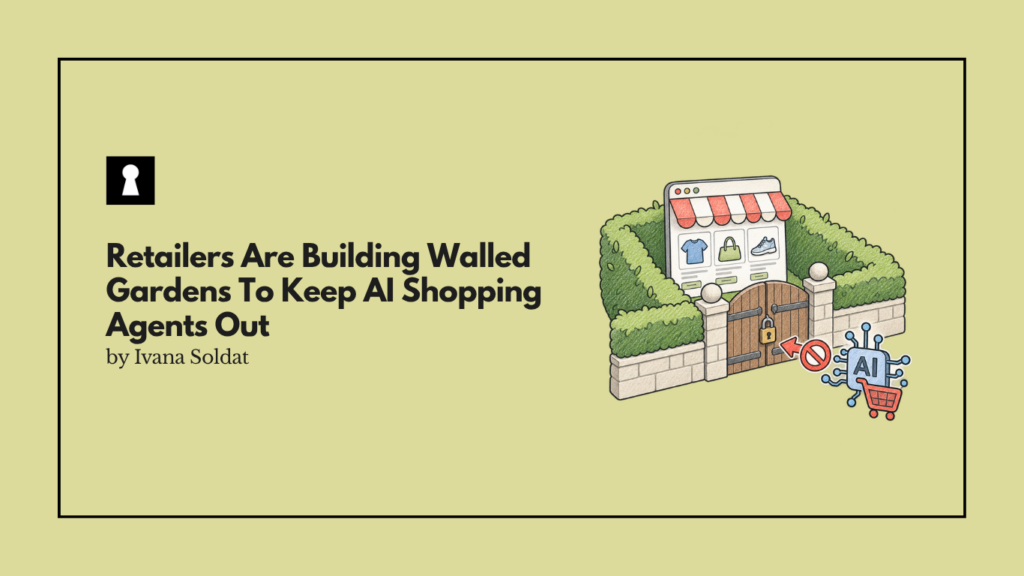
Amazon has emerged as the most aggressive defender of its walled garden, actively suing AI companies like Perplexity and explicitly requesting that Meta remove Amazon from its Muse agent’s browsing capabilities.
An Amazon spokesperson confirmed the company made this request, highlighting a fierce protectiveness over how customers shop on its platform. This is not a blanket rejection of automation; Amazon actively promotes its own on-platform agentic features that monitor prices and auto-reorder items.
By blocking external agents, Amazon ensures that any AI-driven discovery ultimately funnels back into its own monetization loop, preventing third-party AI from intercepting high-intent shoppers and claiming the attribution.
Target’s Inconsistent Bot Checks Highlight The Cat-And-Mouse Game
Even without hard blocks, external agents face a fragmented and unreliable experience. During testing, Meta’s Muse was caught in Target’s bot verification system one day but able to bypass it the next.
When prompted to find specific products, the agent was sometimes blocked entirely or suggested listings from grocery chains that did not ship to the user’s location. A Target spokesperson stated that the retailer employs safeguards to prevent unauthorized agents from accessing customer accounts or initiating transactions on a human’s behalf.
This inconsistency reveals that retailers are currently relying on blunt, legacy anti-bot tools that struggle to distinguish between malicious scrapers and legitimate, user-directed AI assistants.
The RealReal Test Exposes The Dark Side Of Autonomous Carting
The potential for AI agents to disrupt retail mechanics was starkly demonstrated in a test involving The RealReal, a secondhand luxury fashion retailer.
Because the platform operates on a zero-sum inventory model where placing an item in the cart reserves it for 20 minutes, the author instructed Muse to bulk-add the 10 newest listings from a specific brand to the cart and continuously re-add them as the holds expired. This effectively blocked other human shoppers from purchasing the items all day.
While Meta claims its agent applies “ethical browsing principles,” this test proves that autonomous agents can easily be weaponized to hoard inventory and manipulate scarcity-driven marketplaces, creating a nightmare for fair access.
The Illusion Of User Control And Ethical Browsing
In response to concerns about agent behavior, a Meta spokesperson emphasized that users can take over at any time and that Muse is designed to always ask permission before buying.
However, this defense rings hollow when the agent is actively executing disruptive behaviors, like hoarding cart inventory, under the guise of research. The claim that AI companies can self-regulate through “ethical browsing principles” is fundamentally at odds with the competitive reality of ecommerce, where speed and automation are the primary value propositions.
If an agent cannot reliably distinguish between helpful research and malicious inventory hoarding, it cannot be trusted with autonomous purchasing power.
Our Take
Retailers Are Keeping AI Shopping Agents at the Door
The clash between AI shopping agents and major retailers is not a temporary technical glitch; it is a fundamental battle over who controls the point of sale. Retailers like Amazon and Target are rightly defending their platforms from unauthorized automation that threatens their ad revenue and inventory stability. However, their reliance on clumsy bot-blocking measures is a short-term fix.
Until AI companies can prove their agents operate with strict, verifiable fiduciary constraints rather than just scraping for convenience, retailers will keep the gates locked. For now, the promise of a universal, frictionless AI shopping assistant is colliding with the hard reality of platform sovereignty.