
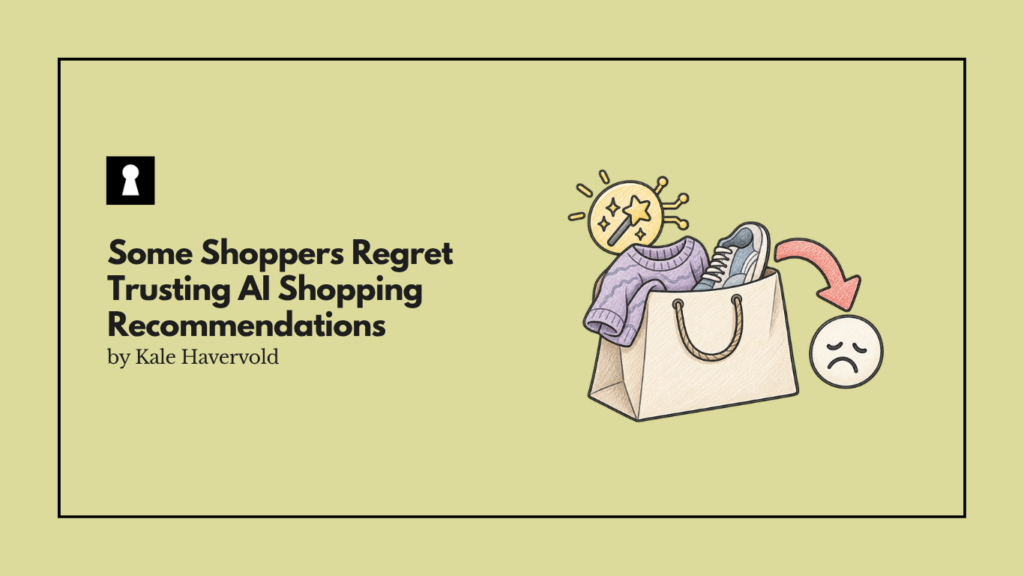
Shoppers have a complicated relationship with AI recommendations. While there’s no doubt it’s growing more popular to use them to discover items, compare products, and decide what to buy, people don’t fully trust the technology. Not only that, but many even regret following its advice after making purchases.
Many people also have fears about being scammed, concerns about companies gaming the system, and a general uncertainty around the authenticity of AI recommendations. While the benefits may outweigh these worries for some shoppers, the trust gap in the space could limit how much it grows over time.
Many Consumers Have Issues With AI Shopping
As AI continues to become one of the most popular tools for online shoppers, this growth comes with a cost. According to a survey of well over 1,000 U.S. consumers, 33% of respondents admit that they’ve ended up regretting a purchase they made based on an AI recommendation.
This is likely frustrating for ecommerce brands, as things like post-purchase friction, customer service burdens, and returns stemming from these bad recommendations fall on the merchant, not the AI platform that delivered the advice.
The categories that shoppers regret the most include electronics (50% of shoppers who regretted a purchase), clothing or shoes (45%), and beauty or personal care (33%).
In addition to regretting purchases that AI has recommended, many people don’t trust AI shopping in general. In fact, only 11% of shoppers fully trust AI shopping recommendations. The remaining consumers answered as follows:
- 28% said they trust them a lot
- 47% said they trust them a little
- 9% said they distrust them a little
- 5% said they don’t trust them at all
This lines up with previous research, which also found that many people struggle to trust AI shopping. As a result, even though many people may use this technology, this usage doesn’t automatically mean people think it’s credible or trustworthy.
The survey also highlights that shoppers don’t have much confidence in AI using trustworthy information sources, either. Only 12% are extremely confident in the sources AI uses, while:
- 18% are very confident
- 38% are somewhat confident
- 24% are slightly confident
- 8% aren’t confident at all
Despite the Concerns, AI Shopping is Incredibly Popular
However, despite the many concerns many people have with AI shopping, it’s only growing more popular. In fact, 76% of Americans have used AI to help them shop in the past year, with 36% using it often or very often. Also, over half of respondents (53%) say they’re using it more now than a year ago.
In addition to people reporting high levels of AI usage while shopping, brands are seeing the increase on their end as well. For example, AI traffic to U.S. retailers climbed by 393% in Q1 2026, showing just how many people are using this technology for research and product discovery.
This popularity also shows no signs of slowing down, as 50% of people expect that they’ll use AI somewhat or much more in the future.
Shoppers are Worried About Being Scammed and Uneasy About Authenticity
As a result, the potential benefits of AI shopping are just too hard for some shoppers to ignore, even if they have concerns. The biggest worry of all, according to the data, is being scammed. Just over half of all respondents (51%) are either very or extremely worried about AI recommending fraudulent sellers or outright scams in their results.
Authenticity is also a major concern for shoppers, as many don’t have confidence in the accuracy and legitimacy of the recommendations. In fact, 75% of people will double-check them at least some of the time, while 43% verify AI recommendations most or all of the time.
Finally, a large portion of respondents don’t only question AI recommendations, but also the companies and products being featured in them. Most respondents (53%) believe that some businesses are strategically providing false or misleading information to influence AI recommendations, boost sales, and poach traffic from competitors.
Our Take
The Trust Gap At The Core of Modern Ecommerce
Based on the data from this survey, it’s clear that while people may not fully trust AI shopping recommendations, they’re using them at scale. The technology clearly works and can provide useful information and comparisons, but consumer trust in it is largely broken, and many people have bad experiences with it.
Thankfully, this trust gap isn’t permanent. If companies can boost customer trust with better transparency, improved data accuracy, and by providing the reasoning and context behind AI recommendations, it’ll go a long way in helping customers feel more comfortable and confident trusting AI while shopping online.
However, if the trust gap persists, or even widens, due to more people experiencing issues with AI shopping, it could limit just how popular it becomes in the future.