
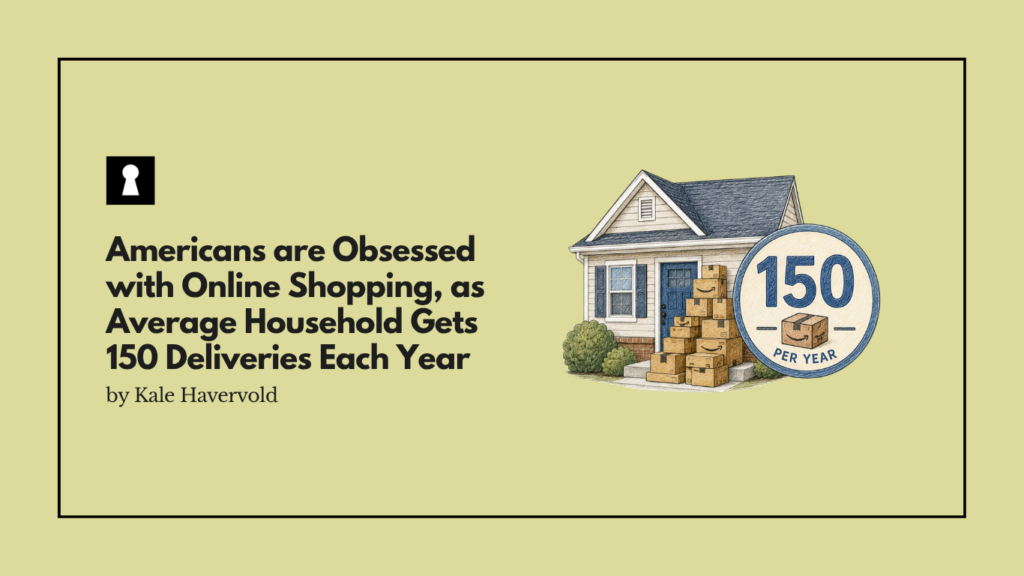
When online shopping burst onto the scene, it was largely seen as an exciting and convenient novelty. However, it has quickly transformed into a habit for most Americans, with the average household receiving around 150 orders every year, and most people shopping online every week.
Online shoppers are also increasingly becoming more strategic, are influenced by a wide variety of things, and shop online in several ways, ranging from while they’re at work to while they’re in bed. Ecommerce brands need to stay up-to-date on these online shopping habits, trends, influences, and behaviors if they want to stay ahead of their competition.
Americans are Shopping Online Like Never Before
While online shopping isn’t new in the USA, the scale it’s currently reaching and how much it’s growing is unbelievable. In fact, 93% of Americans have said they’ve shopped online in the past week, and the average American household receives 2.9 packages each week, which equates to around 150 each year.
This data comes from a brand-new report by FinanceBuzz and the Bank of America, which surveyed 2,000 U.S. adults about their online shopping habits.
While you might think that this percentage is being dragged up by younger and more tech-savvy shoppers, that’s not the case. In fact, each generation saw at least 90% of respondents say they made an online purchase in the last week. The breakdown was as follows:
- 90% of Baby Boomers
- 93% of Gen X
- 93% of Millennials
- 94% of Gen Z
As you can see, online shopping transcends generations, and we’re seeing people of all ages turn online shopping into a weekly habit. However, this level of online shopping is also fairly new for most people, as 68% of respondents say that they shop online more than they did five years ago, compared to 17% who do it the same and 14% who do it less often.
When and Where They Shop Varies
While nearly everyone shops online, when and where they do it varies greatly. The most common time for people to shop online is during the evening from 5 to 9 PM (44% of respondents), followed by the afternoon from 12 to 5 PM (27%), and the late morning from 9 AM to 12 PM (12%).
People can often shop from anywhere, with many purchases taking place on phones and laptops, but one of the most popular places people get their shopping done is actually in bed. In fact, 84% shop online in bed, and this figure goes up to 93% for Gen Z and 90% for Millennials. Another 71% even admit to online shopping while at work.
Many people shopping online, especially those in bed and likely those doing it at work, are doing so from mobile devices, as they’ve become the most popular method for online shopping.
As a result, having an optimized and responsive mobile experience is a non-negotiable for ecommerce sellers nowadays. In addition to that, brands need to make it as easy as possible to check out, as having to tap through multiple menus and select several options introduces friction, which may lead to more abandoned mobile shopping carts.
Reviews, Family, and AI Influence Purchasing Decisions
The report also dives deep into what helps people decide what items to buy when they shop online. Far and away the most common source for people to consult before shopping is customer reviews, as 94% of shoppers check them before deciding what to buy. Beyond that, 53% of respondents say they need a 4-star rating or higher on an item to buy it online.
It’s no surprise to see reviews rank so highly, as they build trust and credibility in a brand, which are some of the most important ecommerce success factors. Many people feel safer and more secure buying an item with plenty of positive reviews, and third-party reviews often come off as more honest and trustworthy than a company ad.
Following reviews, other sources that people trust to help them decide what to buy include family and friends (44% of respondents), social media reviews (39%), and AI tools (31%). Speaking of AI, it’s taken the online shopping world by storm, as the report found that 80% of Americans use it to help make shopping decisions.
However, this doesn’t mean they fully trust the information it provides them, as 57% of respondents still trust customer reviews more than AI. This echoes previous research which found that while using AI for shopping is appealing to customers, some struggle to trust it.
People Are Shopping Strategically
When people shop online today, they’re often doing it strategically, in an effort to save as much money as possible. The top methods people use to save when shopping online include:
- Timing purchases around sales (72% of respondents)
- Searching for discount codes (61%)
- Waiting weeks or months for the right sale (39%)
- Researching price history (36%)
- Using cash back or rewards cards (33%)
In a similar vein, 94% of shoppers say that free shipping is a deciding factor in where they shop, and 81% of them have added items to their carts to hit the threshold for free shipping.
With how important free shipping is to customers, ecommerce brands that aren’t offering it as an option should consider starting, and those already offering it need to highlight it everywhere they can, especially if the threshold is low and/or manageable for shoppers.
However, another thing that matters nearly as much as free shipping is free returns. In fact, 69% of shoppers say they avoid online retailers that don’t offer free returns. While offering free returns may be a great way to lower risk for shoppers, and thus boost conversions, companies need to be careful.
Free returns, or returns that are too easy, may be expensive for ecommerce sellers due to people exploiting them and taking advantage of lenient policies. As a result, it’s up to individual brands to decide whether offering free and/or easy returns to potentially drive more conversions outweighs the risk of people taking advantage of their policies.
Our Take
Use These Insights to Adapt Your Strategies and Offerings
When active online shoppers tell you how they browse, what they trust, and what influences their purchasing decisions, you better listen. This data offers great insights into the minds and behaviors of shoppers, and ecommerce sellers should use this information to adapt their strategies and offerings.
Whether this is through optimizing your mobile experience, implementing structured and clear free shipping thresholds, or encouraging more customers to leave reviews, your brand should always be looking out for ways you can fine-tune your store to be in line with what matters most to shoppers.